Why Bloom is the Best Alternative for Lifetimely Shopify App
Here’s a clear breakdown of features and a comparison to help you make the right choice. If you're considering the Lifetimely Shopify app, see whether Bloom is the best option for your store analytics.
If you're evaluating Lifetimely (now by Amp) for your Shopify store, you've likely come across Bloom: Shopify Profit Analytics as an alternative. Both are serious analytics tools built for ecommerce, and they share meaningful overlap in features. The difference is in where each tool goes deeper.
Lifetimely does customer lifetime value and acquisition forecasting better than most tools on the market. Bloom does profit analysis, cost structuring, and marketing efficiency at a level of detail that Lifetimely doesn't match. Neither is a full replacement for the other, which is exactly why this comparison exists.
This guide breaks down how the two tools compare across profit tracking, cost management, product insights, customer analytics, attribution, AI capabilities, support, and pricing, so you can understand not just what each tool does, but which one fits your business best.
TL;DR
Lifetimely helps Shopify brands understand customer value through LTV, cohorts, and acquisition performance.
It’s strong for tracking CAC, payback periods, and identifying which customer segments are worth acquiring.
However, its profit tracking stays relatively high-level and doesn’t fully connect costs and marketing to true profitability.
Bloom focuses on profit clarity by connecting revenue, costs, marketing, and operations into one view.
It shows not just revenue or ROAS, but whether your products, campaigns, and channels are actually profitable (POAS).
Bloom helps Shopify brands understand what’s driving margins and make better decisions on pricing, costs, and scaling.
What is Lifetimely?
Lifetimely (by Amp) has become a go-to tool for Shopify brands because it makes core ecommerce metrics easy to understand. It gives merchants quick visibility into profit, customer value, and marketing performance, all in a clean, easy-to-use interface.
Its biggest strengths lie in fast setup, strong cohort and LTV analysis, simple profit tracking, and plug-and-play attribution across major ad platforms. While pricing scales with order volume, it remains accessible for early-stage and growing brands that want clarity without added complexity.
What is Bloom?
Bloom is often considered a strong alternative for Shopify brands that want clear profit visibility without stitching together multiple tools or spreadsheets. What sets it apart is how it connects all the moving parts of your business into one clear view, without requiring a complex setup.
It presents this data through dashboards built around profit, product performance, marketing efficiency, and customer behavior, designed to show what’s working and what needs attention. This makes it especially useful for brands that need clarity on margins and better control over scaling decisions, while remaining more cost-efficient than Lifetimely.
Profit Tracking and P&L Structure
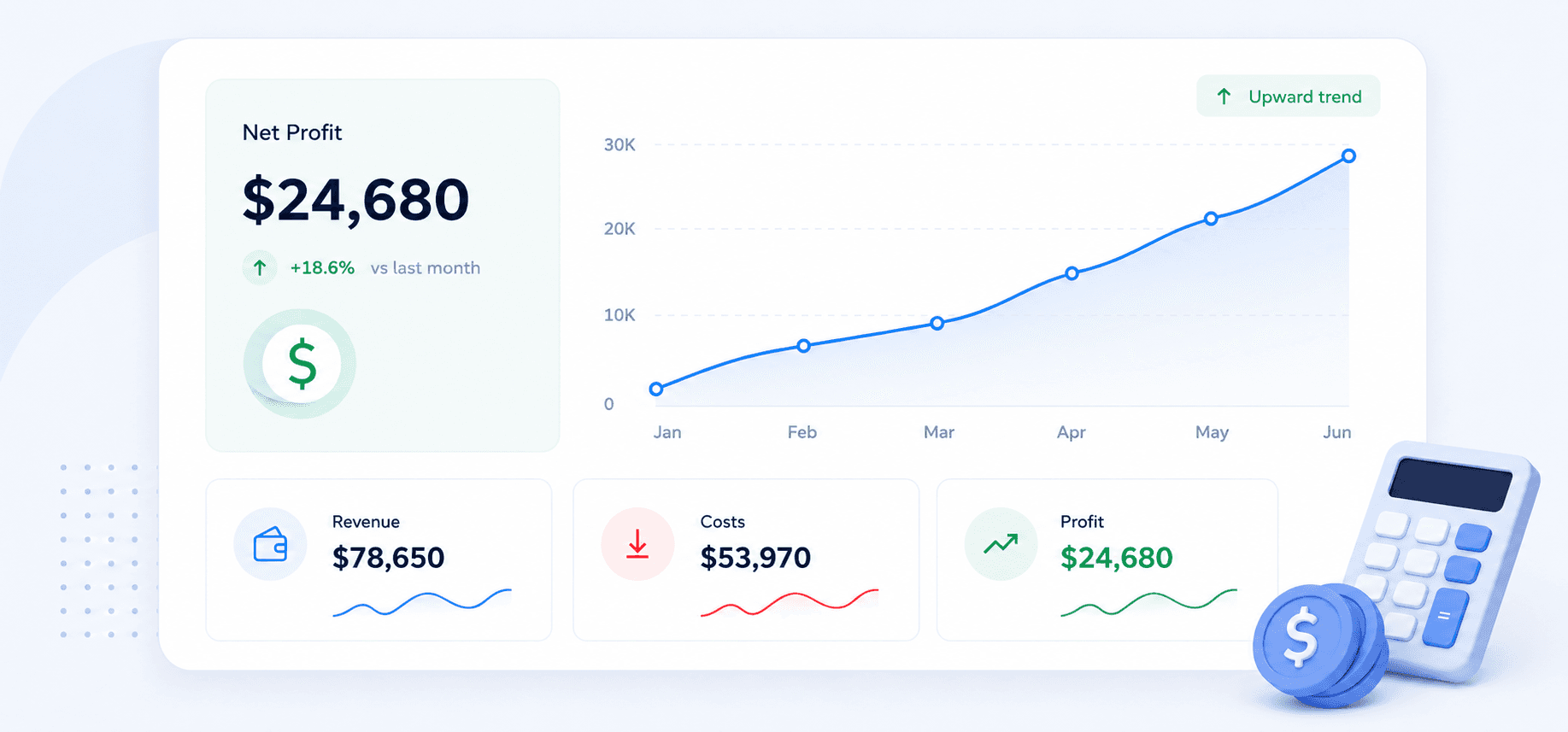
Profit visibility is the foundation of any analytics tool. Both tools cover P&L, but the level of depth differs significantly.
Lifetimely follows a standard ecommerce P&L structure, making it easy to understand overall performance quickly. Cost structuring is less flexible, and insights tend to remain at a summarized level rather than deeply layered:
Standard P&L view: Sales → COGS → Marketing → Expenses → Net Profit
Trend monitoring: Supports daily, weekly, monthly, quarterly, and yearly analysis
Grouped costs: Combines fulfillment, shipping, and transaction fees under a Net COGS bucket, limiting visibility into specific cost drivers
Marketing separation: Tracks CAC and ROAS, but not tied directly to profit impact
Customer insights: Connected to behavior and LTV, but not to actual profitability
Profit accuracy limits: Disputes, chargebacks, and reversals are not tracked separately, which can reduce the accuracy of profit figures
Bloom structures profit as a layered journey, giving visibility into how margins evolve at each step:
End-to-end visibility: Tracks the full flow from Product Merchandise to Gross Profit to Net Profit
Layered margins: Breaks profit into CM1 (gross profit), CM2 (after fulfillment costs), and CM3 (after marketing spend), showing where margins shift at each stage
Detailed cost breakdown: Separates refunds, discounts, COGS, taxes, shipping, marketing, and operations into distinct line items
Accurate profit tracking: Captures chargebacks and disputes as separate cost components, giving cleaner profit figures
Country-level visibility: Analyzes profitability by country to identify high- and low-margin markets
Channel-level profitability: Tracks actual profit across channels and campaigns, not just ROAS
Trend monitoring: Monitors profit performance across daily, weekly, and monthly periods to catch margin leakage early
Verdict: Lifetimely shows you what your profit is. Bloom shows you why it is what it is.
Custom Costs and Expense Flexibility
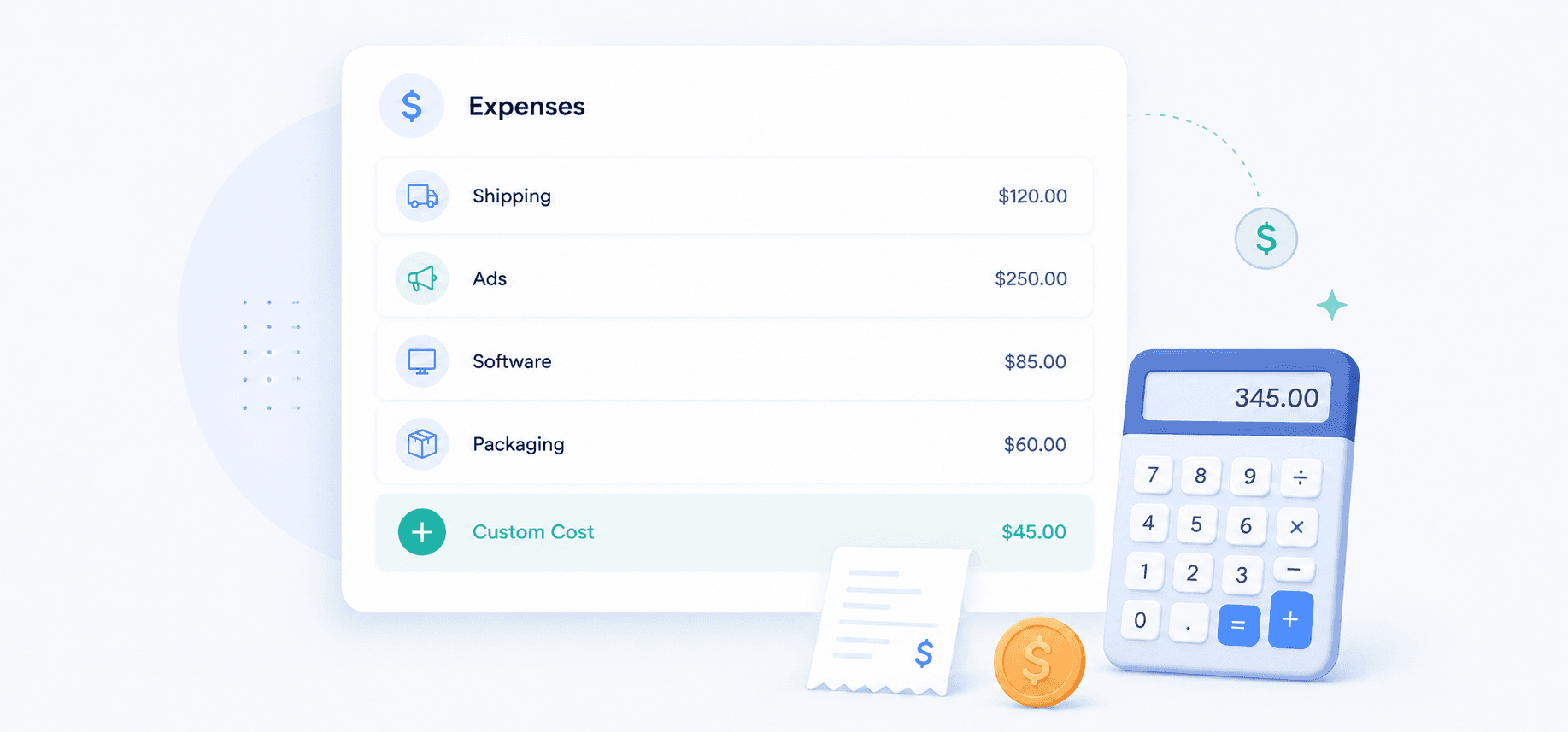
Accurate profit analysis depends heavily on how well a tool adapts to your cost structure.
Lifetimely supports standard cost inputs but relies on a generalized structure for additional expenses. Merchants must define categories themselves, which can lead to overlooked costs as the business scales:
Standard categories: Shipping, product, handling, transaction, and personnel costs
General custom bucket: Operating costs beyond defaults must be defined manually
Basic shipping logic: Primarily handled at the country level using Shopify-based rules and customer-charged shipping
Limited cost types: No dedicated inputs for tariffs, channel fees, or return-specific costs
Additional features: Supports burden rate setup for indirect labor costs such as taxes and benefits, and includes user access control management
Bloom provides a more structured and flexible cost system designed for complex, evolving operations:
Guided COGS setup: Shows how many products have missing vs. assigned costs, making setup manageable even for large catalogs
Granular shipping logic: Supports flexible cost rules based on region, shipping method, and order attributes including weight, quantity, and value, as well as product-level conditions
Predefined categories: Includes structured inputs for rent, salaries, taxes, and other operating expenses rather than leaving merchants to define everything manually
Expanded cost coverage: Supports tariffs, channel fees, and return-specific costs as explicit cost types
Flexible cost handling: Captures COGS for deleted Shopify variants and allows profit calculations based on total revenue, reducing reporting gaps
Access control: Currently being built
Verdict: Lifetimely works for simpler cost structures. Bloom is built for layered, evolving operations.
Product and Order-Level Profitability
Both tools provide visibility at the product and order level, but differ in how deeply they connect costs to actual profitability.
Lifetimely Shopify
Lifetimely offers product and order analysis primarily from a revenue and margin perspective.
Product-level analysis: Breaks down performance by product, variant, product type, and vendor
Revenue-focused metrics: Emphasis on sales performance rather than true profit contribution
Order-level view: Includes costs like shipping, handling, refunds, and gross margin per order
Limited cost linkage: Ad spend is not directly connected to product or order-level profitability, making it harder to assess true margins after marketing costs
Bloom Shopify
Bloom approaches both product and order analysis through the lens of true profitability, connecting revenue, costs, and marketing impact.
Product profitability ranking: Ranks products by actual profit, not just revenue or units sold
Full cost mapping: Links COGS and ad spend to products to show real margins after all costs
Order-level profit breakdown: Captures discounts, refunds, taxes, fees, and fulfillment costs for each order
Profit share visibility: Shows how procurement and fulfillment costs impact net profit per order
Actionable product insights: Highlights which products to scale, reprice, or stop promoting based on profit contribution
In addition to structured reports, Bloom also includes Product Intelligence, which presents insights through visual signals rather than traditional dashboards.
Instant decision signals: Labels products (e.g., Profit Maker, Margin Trap) for quick action
True profitability visibility: Combines sales, margins, discounts, refunds, and ad performance
Trend and momentum tracking: Identifies rising winners, declining products, and margin issues early
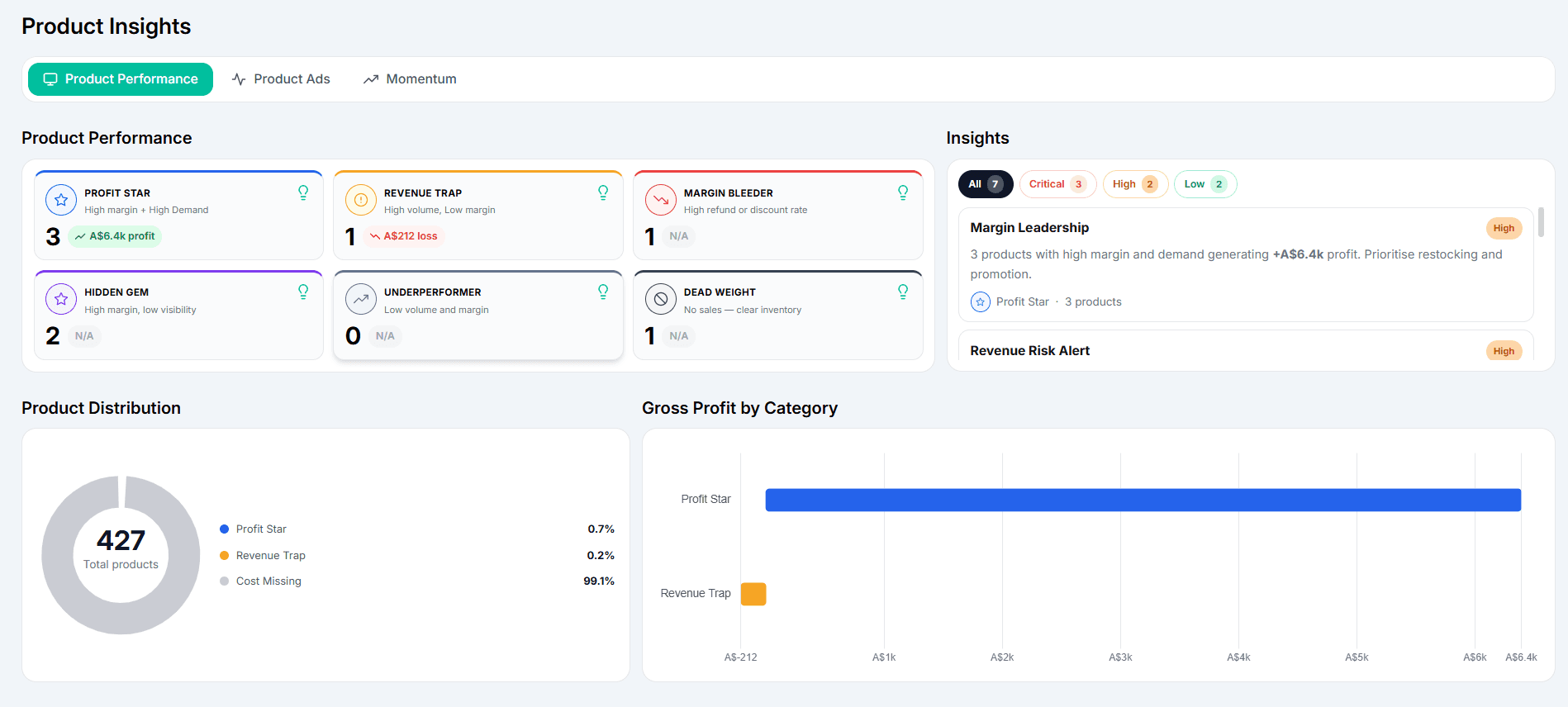
Verdict: Lifetimely explains performance. Bloom shows true profitability and what actions to take (scale, fix or stop).
Cohort Analysis and Customer Insights
Both tools cover cohort metrics. Lifetimely goes significantly deeper here, treating customer forecasting as a core capability.
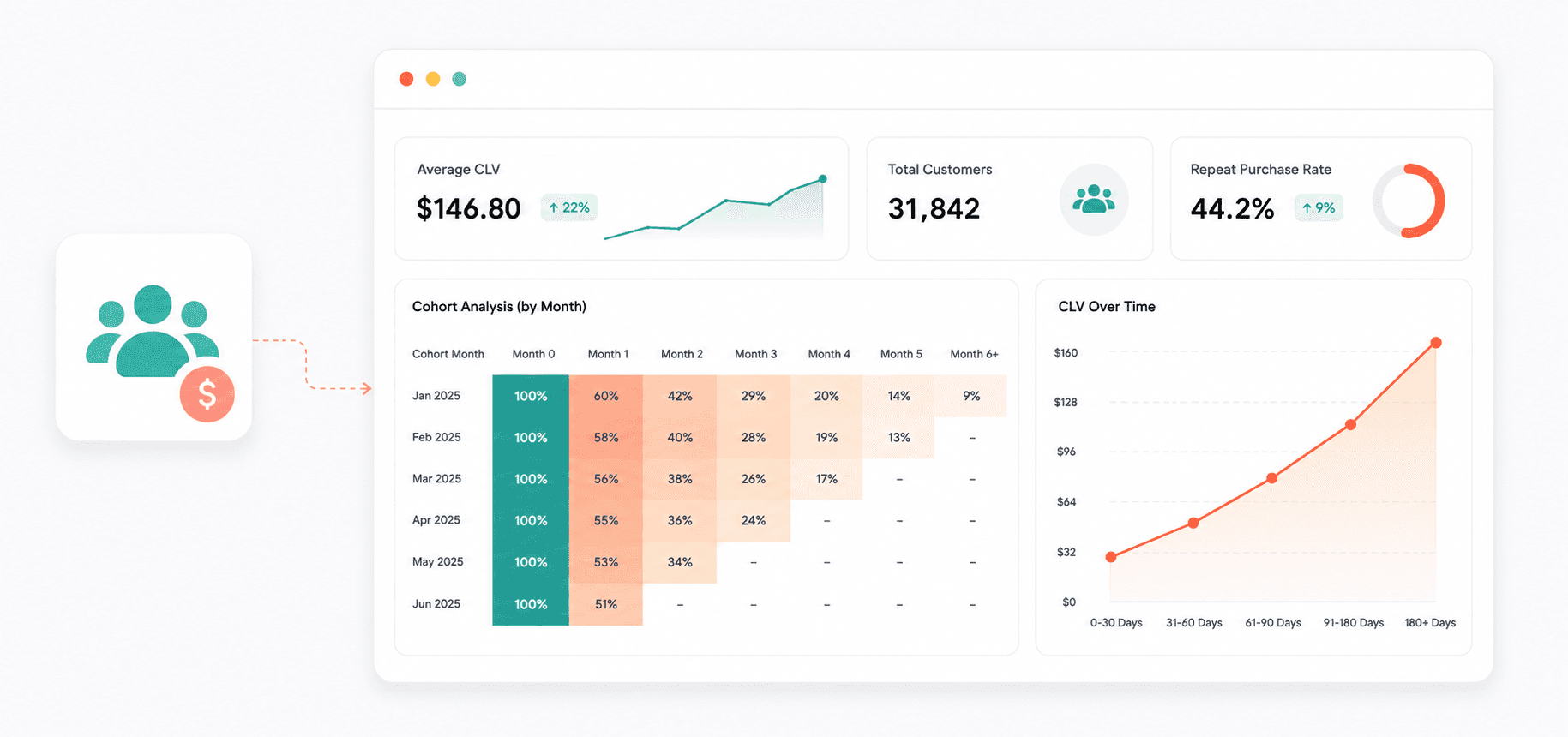
Lifetimely answers: "What will my customers be worth, and how should I invest based on that?"
Cohort tracking: LTV and margin by cohort, alongside repeat purchase behavior over time
Segmentation: Subscriber vs. one-time buyers, channels, products, and discount codes
Key metrics: LTV, CAC, AOV, and payback period
Predictive LTV modeling: Estimates future customer value to support CAC recovery and budget forecasting
Acquisition insights: Identifies which channels bring in high-value, profitable customers
Bloom answers: "How is customer behavior affecting my profitability right now, and what can I do about it?"
Cohort metrics: Revenue, AOV, retention rate, and spend per customer
Behavior tracking: How cohorts grow, repeat, and drop off over time
Profit linkage: Connects cohort behavior to AOV, marketing efficiency, and first-order contribution margin
Verdict: If forward-looking LTV modeling and acquisition planning are your priority, Lifetimely has the stronger offering. If you want customer insights tied directly to current profit performance, Bloom covers that well.
Marketing Attribution and Performance Analysis
Attribution is one of the most critical and often misunderstood areas in ecommerce analytics.
Both tools pull in data from the major ad platforms and give you attribution reporting. The difference is in model depth, lookback length, and whether attribution connects to profit or just revenue.
Lifetimely Shopify offers a centralized attribution dashboard suited for monitoring performance across channels:
Cross-platform data: Pulls from Meta, Google, and TikTok to show CAC, ROAS, and attributed revenue in one place
First-party tracking: Combines platform data with its own pixel, Shopify order data, and UTM parameters for campaign-level tracking
Post-purchase surveys: Captures customer-reported acquisition sources
Drill-downs: Tracks spend, trends, and campaign-level performance
Anomaly detection: Automatically flags spikes or drops in spend and performance
Limited attribution models: First-touch, last-touch, and linear only
Shorter lookback window: Up to 28 days, limiting visibility into longer purchase journeys
Limited cross-device and cross-channel tracking
Bloom builds a more complete picture of the customer journey and connects it directly to profit:
Six attribution models: First click, last click, last non-direct, linear, linear paid, and any click
User-level tracking: Connects individual customer behavior directly to Shopify orders
Extended lookback window: Up to 90 days
Cross-channel visibility: A unified view of how channels work together toward conversion
Profit-based attribution: Tracks POAS (profit on ad spend) alongside ROAS, so you know whether campaigns are generating profit, not just revenue
Beyond attribution, Bloom extends into marketing efficiency, revealing whether marketing is actually profitable and scalable:
Efficiency metrics: Reports on MER, aMER, MPR, and contribution margin to evaluate true marketing performance
Break-even analysis: Identifies break-even points and flags whether campaigns are profitable at the margin level
Customer economics: Connects CAC, LTV, and payback period to evaluate acquisition quality
Email profitability: Measures contribution margin for every Klaviyo campaign and flow, giving email the same profit-level visibility as paid channels
Scaling guidance: Helps determine whether to increase, hold, or reduce ad spend based on actual performance
Verdict: Lifetimely Shopify is built for monitoring marketing performance. Bloom is built for understanding whether that marketing is actually profitable.
AI Capabilities and Advanced Insights
Lifetimely
Lifetimely leads in AI-driven automation and integrations
MCP support: Integrates with AI assistants including ChatGPT, Claude, Copilot, and others via Model Context Protocol
AI-powered insights: Analyzes customer behavior, product performance, and marketing trends, offering recommendations to improve profitability, increase AOV, and drive retention
Benchmark reports: Compares your store's P&L, retention, and acquisition metrics against similar brands
Bloom takes a more practical, decision-first approach instead of relying heavily on AI automation.
MCP support: Integrates with AI assistants including ChatGPT, Claude via Model Context Protocol
Action-first insights: Turns complex data into clear, usable outputs you can act on immediately
Visual decision signals: Highlights product and marketing performance with intuitive cues (e.g., what to scale or fix)
Verdict: Lifetimely leads on AI today. Bloom's strength is in decision clarity, with AI capabilities on the way.
Pricing
Both tools follow tiered pricing, but their structures and value propositions differ significantly.
Lifetimely Shopify
The Lifetimely pricing model scales with order volume, with all features included across every tier. This makes costs predictable, but expensive for high-volume stores:
Free plan: up to 50 orders/month
~$149/month: up to 3,000 orders
~$299/month: up to 7,000 orders
~$499/month: up to 15,000 orders
~$749/month: up to 25,000 orders
~$999/month: unlimited orders
Bloom Shopify
Bloom pricing scales with the depth of features, not order volume. All plans include unlimited orders and a 14-day free trial:
Sprout (~$20/month): Profit tracking, order-level profitability, marketing metrics, COGS and shipping cost inputs, dashboard reporting with funnel insights
Grow (~$40/month): Everything in Sprout, plus product-level insights including Product Intelligence, customer LTV, Klaviyo email profitability, multi-market support, and integrations
Flourish (~$80/month): Everything in Grow, plus advanced attribution, country-level ROAS and profit insights, dedicated support, and upcoming features including profit forecasting and AI-driven insights
A store processing 15,000 orders per month pays up to $499/month on Lifetimely. The equivalent on Bloom is $80/month, with no order volume cap at any tier.
Which Tool Should You Choose?
Short on time? Here’s a quick side-by-side comparison of the key differences:
Feature | Lifetimely Shopify | Bloom: Profit Analytics |
Core Strength | Customer LTV & acquisition forecasting | Profit tracking and marketing attribution |
Profit Tracking | Standard P&L, high-level view | Layered profit (CM1, CM2, CM3) with deep cost visibility |
Cost Structure | Basic, less flexible | Highly granular, structured and customizable |
Custom Costs | Manual setup, limited categories | Predefined+ customizable |
Product Analysis | Revenue and margin focused | Profit focused with full cost mapping |
Order-level profit | Partial cost inclusion | Complete breakdown including ads, refunds and shipping |
Cohort Analysis | Advanced LTV, cohorts, predictive modeling | Cohort behaviour tied to real- time profitability |
Attribution models & Lookback window | Limited (first, last, linear) + 28 days lookback | six models ( first, last, linear, linear paid, last non-direct, any click) + 90 days lookback |
Attribution Depth | Revenue-focused (ROAS) | Profit-focused (POAS) |
Marketing Insights | Performance monitoring | Performance, profitability + scaling decisions |
AI capabilities | Strong (AI insights+ MCP integrations) | Strong (AI insights+ MCP integrations) |
Ease of Use | Clean, summarized dashboards | More-detailed, insight-heavy interface |
Pricing Model | Scales with order volume | Fixed pricing, unlimited orders |
Best for | LTV-driven growth & Acquisition planning | Profit clarity and operational decision making |
Bottom Line
Both the Lifetimely Shopify app and Bloom are capable analytics tools built for ecommerce merchants. They cover significant common ground but go deep in different directions.
Lifetimely excels at forward-looking customer economics: forecasting LTV, modeling CAC recovery, and guiding acquisition decisions with AI-powered insights.
Bloom excels at current-state profit clarity, showing exactly where money is made or lost across every layer of the business.
For most growing Shopify brands, the decision comes down to this: if your biggest blind spot is who to acquire and at what cost, the Lifetimely app addresses that directly. If your biggest blind spot is why your margins look the way they do and what to do about it, Bloom is built for that, at a fraction of the price.
Know Your Real Profit And
The Ads That Actually Sell.
No need to spend. Just try it on your store.