

Introduction
Dropshipping is sold as the easy way into ecommerce. No inventory to buy, no warehouse to rent, no boxes to tape shut at midnight. And the start really is easier than most business models.
But once your store starts gaining traction, things quickly become more complicated. Orders increase, suppliers multiply, marketing costs rise, and suddenly you're spending more time managing operations than growing the business. That is the moment most dropshippers learn the hard truth: making sales and making profit are two different jobs.
Today's dropshipping landscape is far more competitive than it was a few years ago. Simply finding a "winning product" is no longer enough to build a sustainable dropshipping business. It's about building systems that help you consistently acquire customers, fulfill orders efficiently, and stay profitable as you grow.
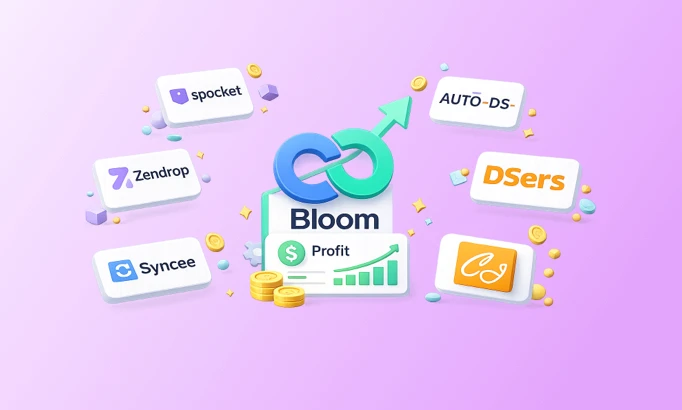
In this guide, we've rounded up the seven best Shopify dropshipping apps for profit margins in 2026 and how they help stores make more money, save time, and avoid costly mistakes.
TL;DR:
The best Shopify dropshipping apps help with one of three things: sourcing and fulfillment, automation, or profit tracking.
DSers is best for low-cost AliExpress sourcing, AutoDS for automation, CJ Dropshipping for branding and fulfillment, Spocket and Zendrop for faster shipping, and Syncee for product discovery.
No single app does everything, which is why most successful stores use two or three tools together.
Sourcing and fulfillment apps get products out the door. Profit analytics helps you understand whether those products are actually making money.
Choose the app that solves your biggest bottleneck today, whether that's finding products, saving time, improving delivery, or tracking profit.
What Problems Do Dropshipping Apps Help Solve?
Dropshipping apps solve the problems that quietly kill stores: thin margins, slow shipping that triggers refunds and chargebacks, unreliable suppliers, and no visibility into whether a product is profitable once ad spend is counted.
This is where dropshipping apps become essential. The right tools automate fulfillment, streamline supplier management, uncover profitable products, improve inventory management, and give you visibility into the metrics that drive profitability. The apps below each help with one piece of that.
The Best Shopify Dropshipping Apps for Profit Margins in 2026
1. DSers
DSers is the default choice for AliExpress dropshipping and one of the most affordable ways to automate sourcing and fulfillment. It integrates with Shopify, WooCommerce, and Wix, and handles bulk order placement, supplier mapping, inventory and price syncing, tracking number syncing, order status updates, AI-powered product optimization and multi-store management, helping merchants reduce manual work as order volume grows.
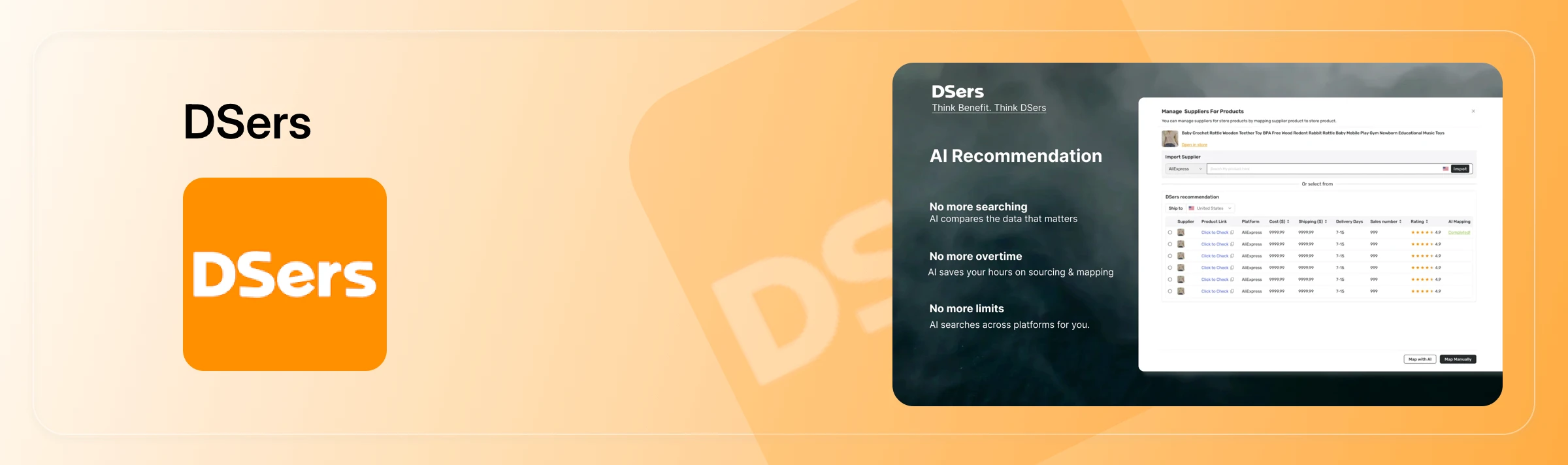
Best for: Beginners, budget-conscious merchants, and AliExpress-focused stores looking to connect with China/USA suppliers and automate fulfillment without a large upfront investment
Cons: Primarily designed for AliExpress-based dropshipping, with limited private-label and branding capabilities. New users may face a learning curve when setting up supplier mappings, pricing rules, and automation workflows, while advanced tracking and automation features require a paid plan
Pricing: Free plan available. Paid plans start at $19.90/month (Advanced), $49.90/month (Pro), and $499/month (Enterprise). All paid plans include a 14-day free trial, no credit card needed.
2. AutoDS
AutoDS automates core dropshipping operations across 25+ suppliers (AliExpress, Amazon, eBay, CJDropshipping, Walmart, and private suppliers). It lets you import products in 1-click, optimize listings using AI, discover products in the AutoDS Marketplace, and automate key workflows like price and stock monitoring, order fulfillment, and tracking updates. It also includes tools for product research, competitor ad insights (Facebook, TikTok, Instagram), print-on-demand support, and optional branding features depending on setup and supplier.
For stores processing 20+ orders/day, it significantly reduces manual workload, helps prevent overselling, and streamlines day-to-day operational management.
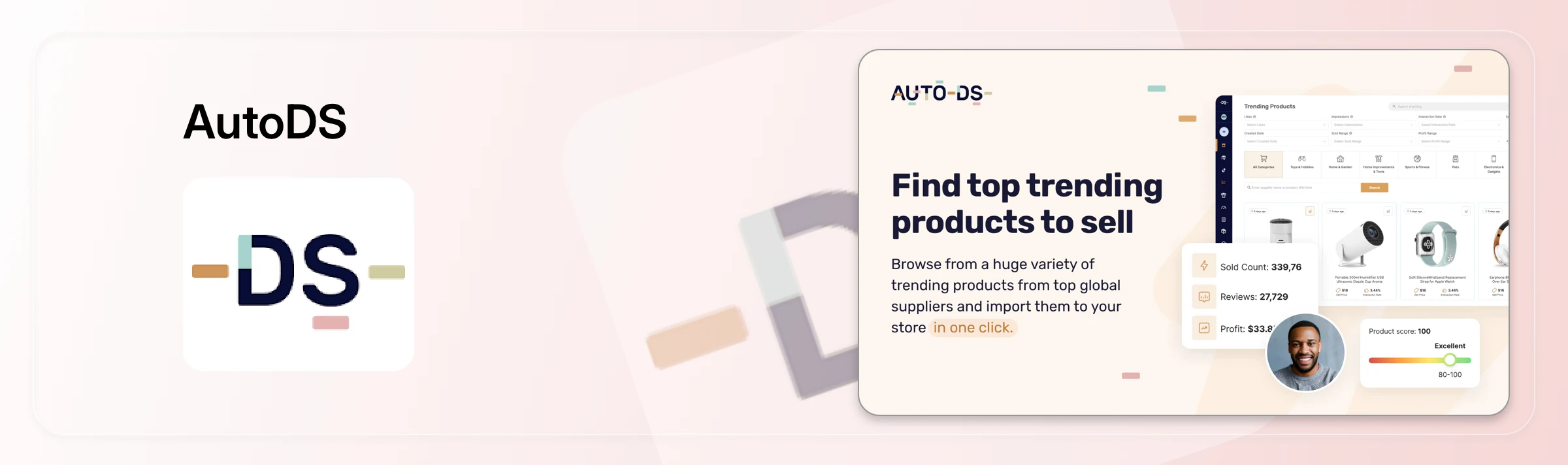
Best for: Multi-channel sellers and growing stores that want to automate product sourcing, fulfillment, and inventory management.
Cons: Pricing scales with product volume and can become expensive as stores grow. The credit-based system for “Fulfilled by AutoDS” may feel complex for new users. Steeper learning curve than DSers. Private suppliers/warehouse features require paid plans
Pricing: Pricing starts at $26.90/month (200 products), with Starter at $39.90/month (500 products) and Advanced at $66.90/month (1,000 products). All plans include a 3-day free trial.
3. CJ Dropshipping
CJdropshipping allows sellers to source products, automate order syncing, and fulfill orders faster through a global warehouse network in China, the US, Europe, and other regions. It also offers product sourcing, print on demand, custom packaging, and 3PL fulfillment, where sellers can send inventory to CJ warehouses for storage, packing, and shipping. Branding options such as logos, inserts, and custom packaging are available depending on the service and setup.
No monthly subscription required for basic use, so you only pay for products, shipping, and any optional services as orders come in, which keeps fixed costs low.
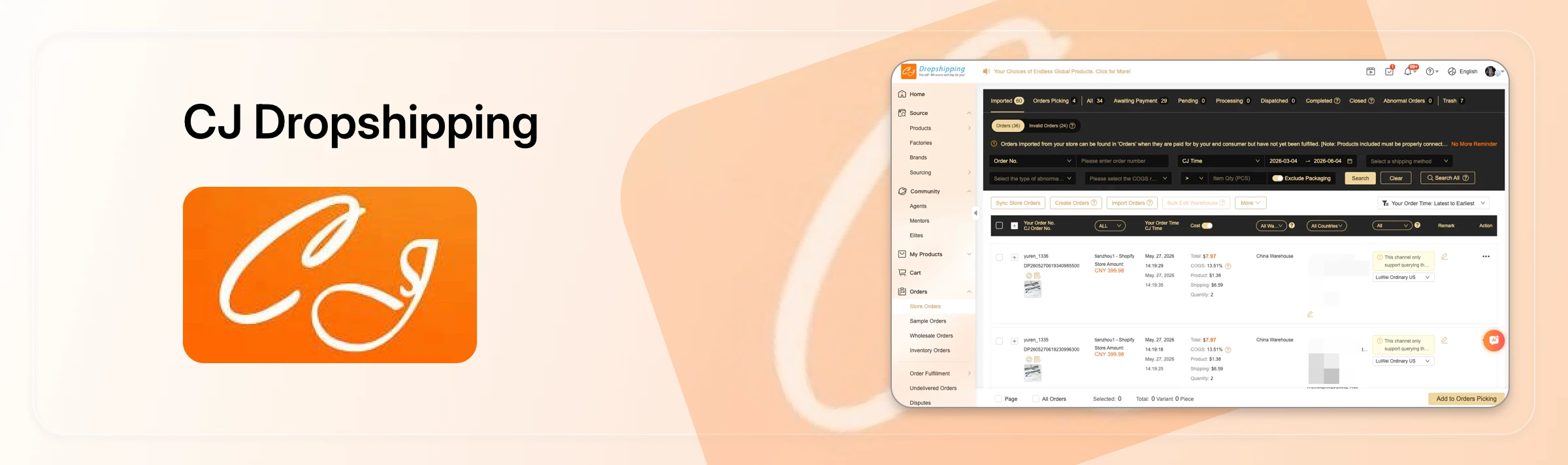
Best for: Dropshippers and DTC brands that want sourcing, fulfillment, and branding in one system, especially those moving toward branded or semi-branded stores.
Cons: Can feel overwhelming for beginners due to its wide range of features, and per-order service fees may reduce profit margins over time. Some advanced services also depend on product type, order volume, or eligibility.
Pricing: Free to join with no subscription or minimum order required. Service fees apply per order and vary depending on the product type and shipping destination.
4. Spocket
Spocket is a Shopify-focused dropshipping platform that connects merchants with vetted suppliers primarily in the US and Europe, helping them offer faster shipping and better product quality than many AliExpress-based setups. It includes one-click product imports into Shopify, WooCommerce, Wix, BigCommerce, and Ecwid, automated order fulfillment, real-time inventory syncing, branded invoicing, product sampling, and AliExpress integration. Sellers can also access product research tools, customization features, and AI-powered store and content creation tools.
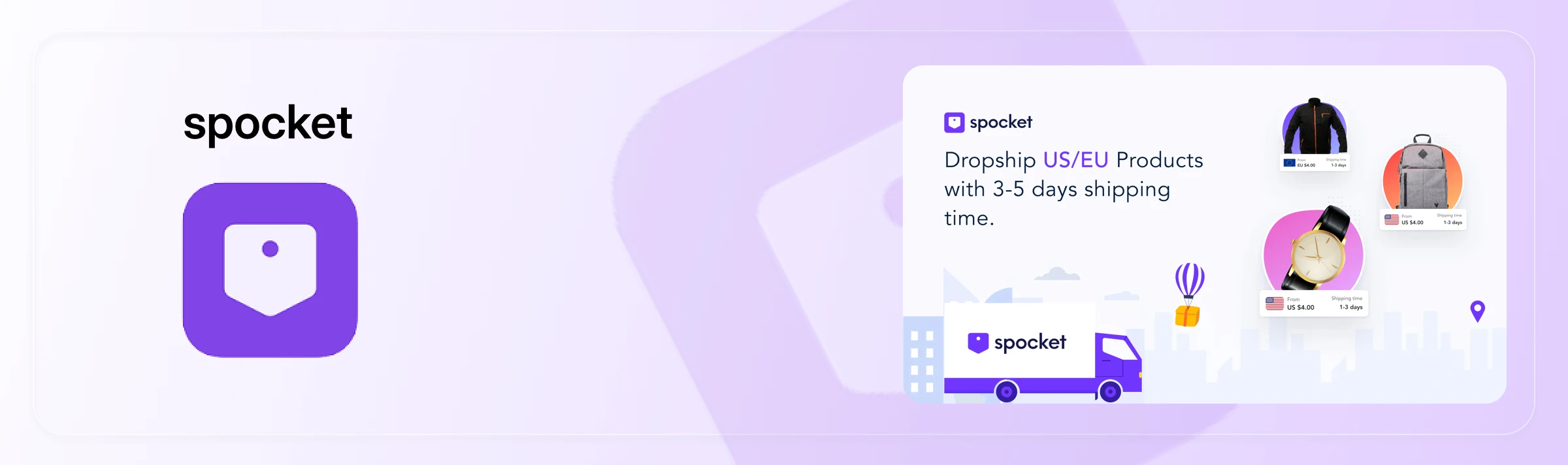
Best for: Brand-focused stores selling to US or EU customers who want quicker delivery and a more premium customer experience.
Cons: It is one of the pricier options and product costs are generally higher than AliExpress, so your raw margin per item is usually slimmer.
Pricing: Free plan available. Paid plans start at $39.99/month (Starter) and $59.99/month (Pro), with higher-tier plans available for larger catalogs and premium products. Annual billing offers significant discounts on paid plans. All paid plans run on a 7-day free trial.
5. Zendrop
Zendrop is a Shopify-first dropshipping platform that combines product sourcing, automated fulfillment, and branding tools in one system. It offers US and China-based fulfillment with automated order processing, tracking sync, and product discovery tools for sourcing trending products. It also includes print-on-demand, private labeling, and custom packaging options, along with AI-assisted tools like store building and ad generation on selected plans.
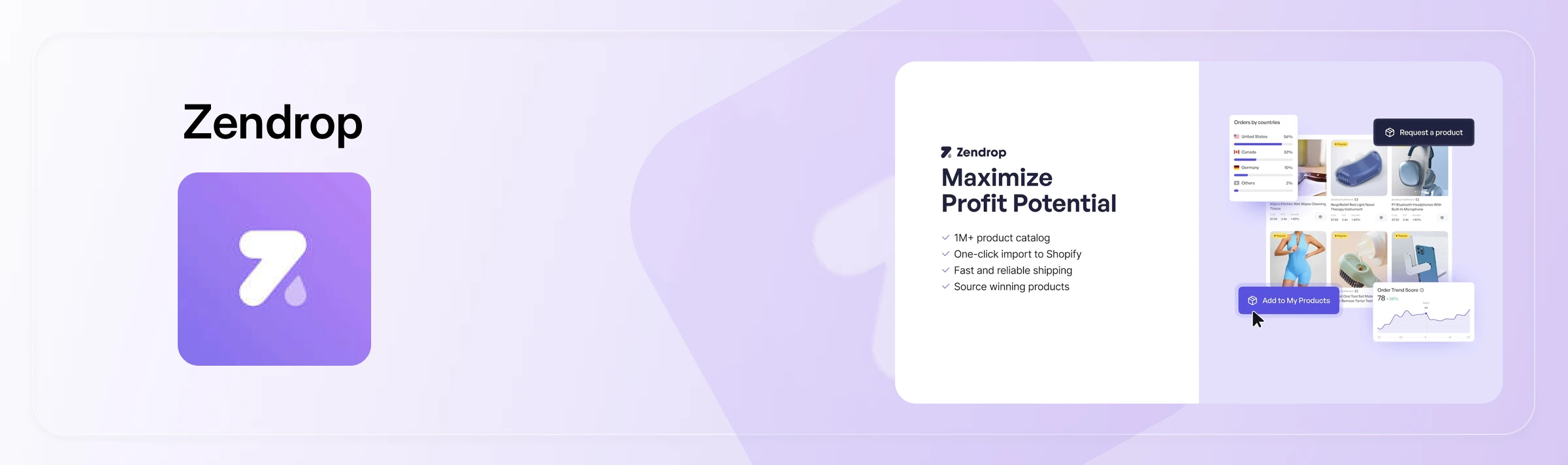
Best for: Shopify sellers who want branded fulfillment, faster US shipping options, and a simpler all-in-one workflow.
Cons: The free plan is limited, with fewer automation features and lower usage caps than paid tiers. Product costs can be higher than direct sourcing, and the platform is less suited to multi-channel sellers.
Pricing: Free plan available. Paid plans start around $49/month (Pro) and step up to about $79/month (Plus), with custom branding, automated fulfillment, and higher product limits.
6. Syncee
Syncee is a supplier marketplace that connects merchants with millions of products from verified suppliers across the US, EU, UK, Canada, Australia, and other regions. Beyond sourcing, it focuses heavily on product discovery, using AI-assisted recommendations to help sellers find trending products that fit their niche. The platform includes real-time inventory and price syncing, direct supplier communication, zero transaction fees, and a DataFeed Manager that lets you import products from virtually any supplier without juggling multiple tools.
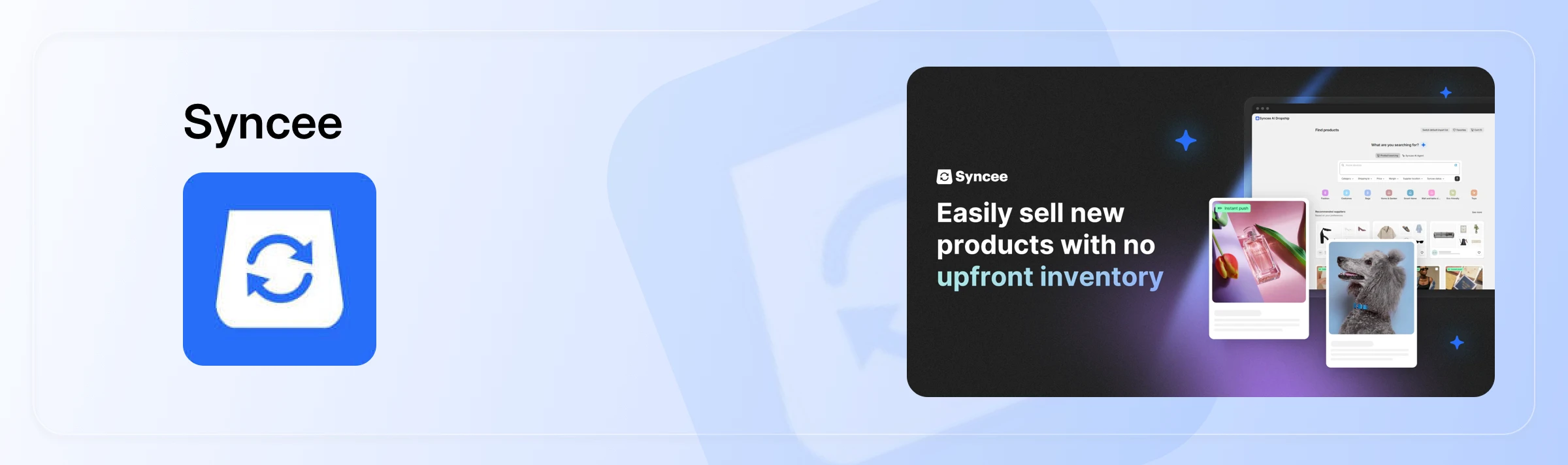
Best for: Sellers who haven't settled on a niche yet and want AI-assisted product discovery, a large supplier marketplace, and the flexibility to work with both marketplace and external suppliers.
Cons: The free plan is limited to 25 product imports, making it better suited for testing than running a store. The platform offers a wide range of features, but the interface can feel less streamlined than some Shopify-focused alternatives. Access to certain suppliers and advanced sourcing features requires a paid plan.
Pricing: Free plan available. Paid plans start at about $39.99/month (Basic) and $59.99/month (Pro), with larger Business plans available for higher import limits and supplier access.
7. Bloom Profit Analytics
Every dropshipping app above helps you find products, manage suppliers, and fulfill orders. What they don't tell you is whether those orders are actually making money once ad spend, shipping costs, discounts, transaction fees, tariffs and product costs are accounted for. That's where profit often leaks.
Bloom is a Shopify profit analytics platform built to show what you keep after every cost lands. Unlike tools that rely on broad assumptions, Bloom allows merchants to customize cost inputs, especially around COGS, shipping scenarios, subscriptions, tariffs, and taxes, helping produce more accurate net profit reporting.
Instead of focusing on revenue, ROAS, or order volume alone, it helps merchants understand profitability at the product, order, marketing, and store level. That means spotting products that look like winners in ad platforms but lose money once fulfillment and acquisition costs are factored in.
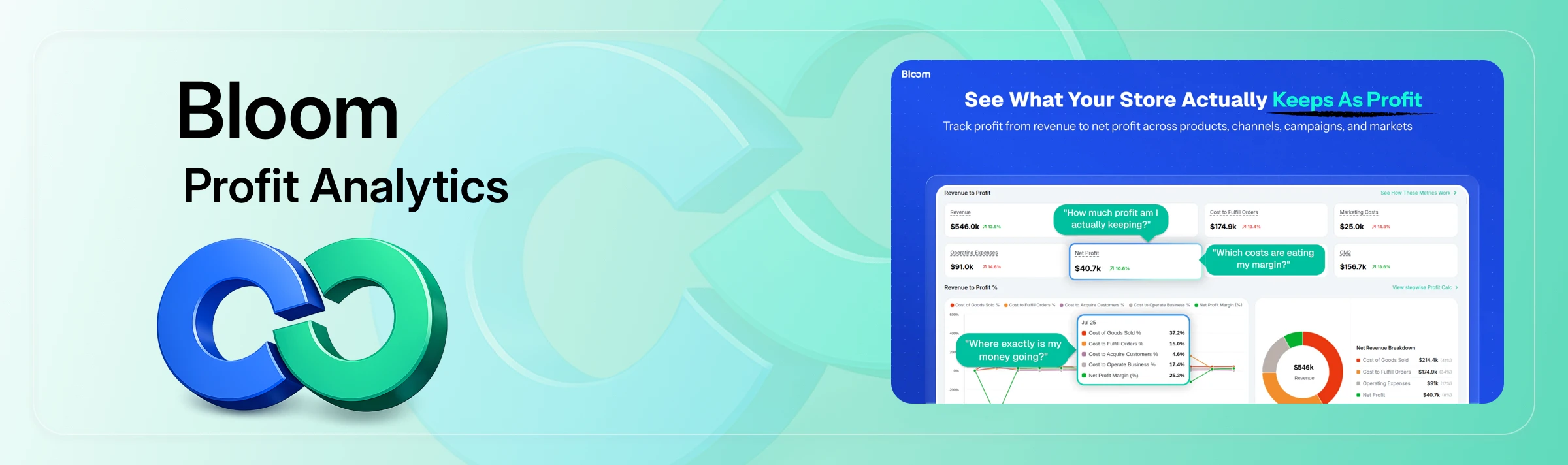
Best for: Dropshippers who want to track net profit by SKU, order, marketing channel, campaign, and email flow, spot losing products and channels fast, and make smarter decisions about where to scale ad spend.
Cons: Bloom is an analytics layer rather than a sourcing or fulfillment tool, so it complements the platforms above rather than replacing them. It delivers the most value once your store has orders and marketing spend to analyze.
Pricing: Plans start at about $20/month and scale to around $80/month, with unlimited orders, support for up to three stores, and a 14-day free trial on all plans.
Which App is Best for Different Merchants?
If all seven options are starting to blur together, here's the 5-second version.
Your situation | Best fit | Why |
Just starting with AliExpress and a limited budget | DSers | Free plan available, low-cost automation, bulk ordering, and direct AliExpress integration make it easy to start without a large upfront investment. |
Running 20+ orders per day and want to automate operations | AutoDS | Automates sourcing, inventory syncing, fulfillment, tracking, and product research across multiple suppliers, reducing manual work as volume grows |
Want sourcing, fulfillment, and branding in one platform | CJ Dropshipping | Combines product sourcing, global warehousing, print-on-demand, custom packaging, and 3PL services without a monthly subscription requirement |
Selling to US or EU customers who expect fast shipping | Spocket | Connects you with vetted US and EU suppliers, helping improve delivery times and customer experience |
Building a branded Shopify store | Zendrop | Combines sourcing, fulfillment, private labeling, custom packaging, and AI-powered tools in a Shopify-focused workflow |
Not sure what to sell yet | Syncee | AI-assisted product discovery, millions of products, and access to verified global suppliers help merchants find and validate product opportunities. |
Already generating sales but unsure of actual profit | Tracks net profit by SKU, order, channel, campaign, and email flow so you can identify profit leaks and scale what is truly profitable. |
How to Choose the Right Dropshipping Apps for Shopify Store?
Dropshipping has matured into a legitimate business model that requires patience, strategy, and the right technology stack. No single app handles everything, which is why most successful stores rely on a combination of tools rather than a single solution.
A good dropshipping setup should solve your biggest bottlenecks. If slow shipping is causing refunds and customer complaints, prioritize a supplier network with faster fulfillment. If repetitive tasks are eating your time, focus on automation. If sourcing and fulfillment are running smoothly but you still don't know which products are truly profitable, profit tracking should be your next investment, not another supplier app.
The merchants still standing in a year are not the ones who found a magic product. They are the ones who run their store like a business, lean on the right tools, and always know their real numbers.
FAQ
Is Dropshipping Still Profitable In 2026?
Yes, but the easy money phase is over. Ad costs are higher and customers expect fast shipping and real brands. Profit now comes from efficient operations and knowing your numbers, not from luck. Stores that track true profit per product and cut the losers tend to survive than stores that only watch revenue.
What Is A Good Profit Margin For Dropshipping?
A good dropshipping profit margin is usually around 15% to 20%, though stronger stores may aim for 25% to 35% depending on ad costs, shipping, refunds, and fees. The most important metric is your actual profit per order after all costs, not a generic benchmark.
Do I Need To Pay For A Dropshipping App?
Not always to start. DSers and CJ Dropshipping let you launch for free or near-free, and several others offer free trials. You usually start paying once you need automation, faster shipping, or higher order volume. Treat the subscription as a cost in your margin math so a tool does not quietly erase your profit.
Can A Dropshipping App Tell Me Which Products Are Losing Money?
Sourcing and fulfillment apps generally cannot, because they do not see your ad spend or full cost picture. A profit analytics app like Bloom does. It combines order data with product cost, shipping, and ad spend to show true profit per product, and it flags items that look profitable on ad-platform ROAS but lose money once real costs are counted.
How Many Dropshipping Apps Should I Use?
Most profitable stores run two or three: one for sourcing or fulfillment, sometimes one for automation, and one for profit tracking. Adding more than that usually adds cost and complexity without adding margin.
Discover More