The Best Attribution Tools for Shopify in 2026 for Multi Channel Tracking
Compare the 7 best Shopify attribution tools for 2026 by features, pricing, ratings, and multi-channel tracking to pick the right platform for your store.
Choosing a Shopify marketing attribution platform gets confusing fast, because customers almost never buy after a single click. A shopper might find your brand on TikTok, come back through a Meta ad, open an email, then finally buy after searching on Google. Four touchpoints, one sale, and four platforms all claiming credit.
That is the problem multi-channel tracking is built to solve. A good Shopify attribution tool shows you the full customer journey, lets you compare attribution models like first click, last click, and last non-direct click, and helps you set an attribution window that matches how your customers actually buy.
This guide compares the 7 best attribution tools for Shopify in 2026. For each one you get the key features, current pricing, user rating, and the type of store it fits best. If you run a US-based DTC brand weighing your options, or you are just trying to figure out which marketing attribution platform is worth paying for, start with the comparison table, then jump to the tool that matches your store.
Quick Comparison: Best Shopify Attribution Tools 2026
Platform | Rating | What it does | Attribution Pricing | Best for |
Bloom | 5.0⭐ | Profit-first attribution that ties marketing performance to contribution margin, break-even ROAS, ad spend, product costs, refunds, discounts, and shipping. | $80/month,all features included | Shopify brands that want to scale campaigns on profit, not just ROAS |
TrueProfit | 4.9⭐ | Net profit tracking with ad-level and product-level attribution, assisted purchases, and net profit on ad spend. | $200/month Enterprise plan | Merchants who want attribution inside a broader profit-tracking workflow |
Juicy Attribution & Profit | 4.9⭐ | Simple ad attribution that connects orders to campaigns and shows profit after costs, fees, shipping, and ad spend. | $29/month Stores with 500 orders/month | Smaller stores that want simple, profit-aware ad attribution |
Polar Analytics | 4.8⭐ | Enterprise analytics that connects attribution with margin, LTV, retention, P&L, and cross-store reporting. | $750/month GMV-based | Larger brands needing attribution plus business intelligence in one place |
TrueROAS | 4.8⭐ | Ad attribution across Meta, Google, TikTok, and more using tracking, surveys, and AI-based modeling. | $116/month for stores generating up to $50K in revenue. | Brands focused mainly on paid ad attribution and ROAS clarity |
Triple Whale | 4.2⭐ | Attribution and ecommerce intelligence with pixel tracking, multi-touch models, surveys, dashboards, and creative insights. | $219/month | Larger DTC teams with higher ad spend and multiple paid channels |
ThoughtMetric | 4.2⭐ | Multi-touch attribution with server-side tracking, configurable lookback windows, and campaign and creative reporting. | From $99/month (up to 50k pageviews) | Brands that want a dedicated marketing attribution tool |
How to Choose a Shopify Attribution Tool
The right Shopify attribution tool matches how your customers buy and what decision you are trying to make. Before you pay, check six things: which attribution models it offers, the attribution windows it supports, how it tracks (pixel, server-side, surveys, or UTMs), which channels it integrates with, the pricing model, and whether it connects marketing performance to actual profit.
That last point separates a reporting tool from a decision tool. Plenty of platforms will tell you a campaign drove revenue. Far fewer will tell you whether that campaign made money after product cost, shipping, refunds, and ad spend. If your goal is deciding where to put the next dollar of spend, profit context matters more than another dashboard.
A quick checklist:
Attribution models: Does it cover first click, last click, last non-direct, and at least one multi-touch view?
Attribution window: Can you set the lookback period to match your buying cycle?
Tracking method: Pixel, server-side, surveys, UTMs, or a mix? Each has tradeoffs for accuracy.
Integrations: Meta, Google, TikTok, Klaviyo, and your shipping data.
Pricing fit: Does the cost make sense at your revenue, or is it built for enterprise budgets?
Profit connection: Does it stop at revenue, or carry through to contribution margin?
1. Bloom
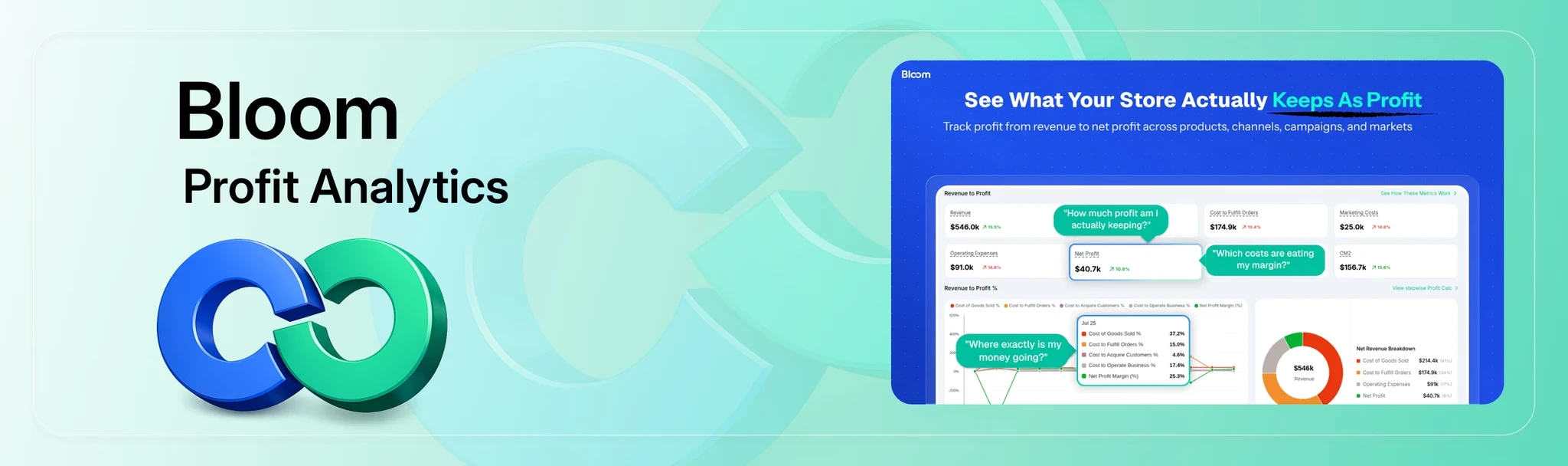
Bloom is built for Shopify merchants who want attribution to answer a bigger question than which ad got the last click. It attributes each completed order back to the channels customer interacted with before converting, then ties that channel performance to contribution margin and break-even ROAS, so you can see which campaigns are worth scaling on profit instead of revenue. That makes it a strong fit for brands ready to move from surface-level ad reporting to profit-based marketing decisions.
Rating: 5.0 ⭐
Capabilities:
Profit-first attribution built specifically for Shopify stores
Multiple attribution models: first click, last click, last non-direct, any click, linear, and linear paid
Attribution windows of 1, 7, 14, 30, and 90 days
Campaign analysis tied to contribution margin, break-even ROAS, ad spend, refunds, shipping, and product costs
Pricing: $80/month, which includes marketing attribution and all core features.
Breakthrough: Shows which campaigns are worth scaling based on profit, not just ROAS.
Bottleneck: You need accurate cost inputs (product cost, shipping, ad spend) to get the most from the profit view.
2. TrueProfit
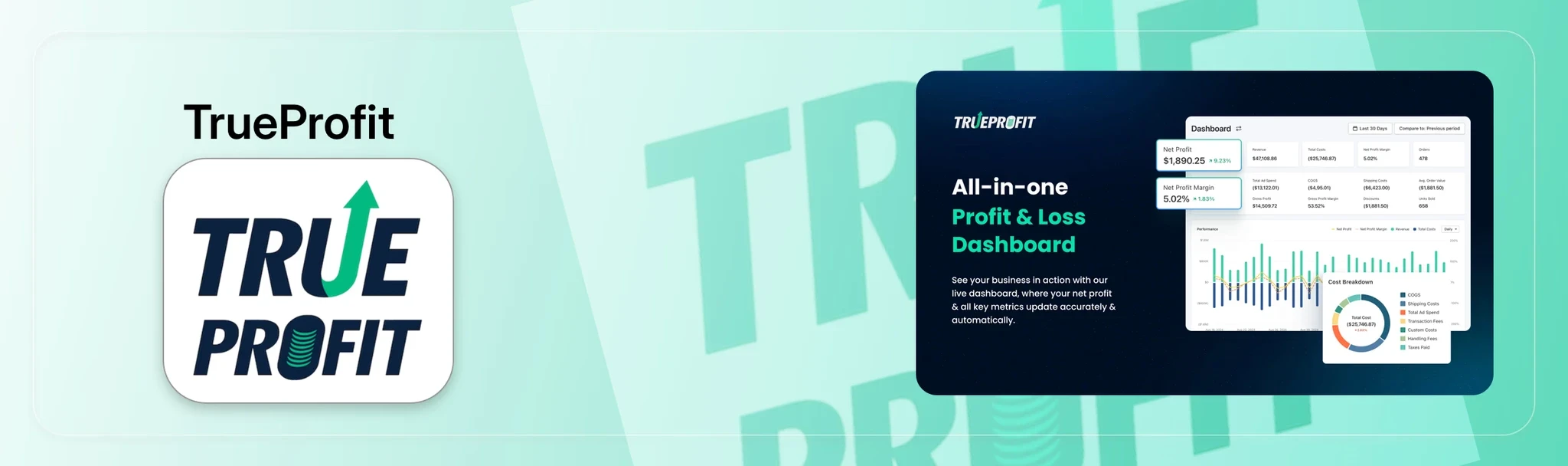
TrueProfit focuses on net profit tracking and folds attribution into that profit system. Instead of judging ads on revenue or ROAS alone, it shows ad performance through net profit, which is useful if profit reporting is already your main workflow.
Rating: 4.9 ⭐
Capabilities:
Product-level and ad-level attribution
Last-click and assisted-purchase tracking
Net profit on ad spend
Real-time profit and ad performance reporting
Pricing: Marketing attribution sits on the $200/month Enterprise plan.
Breakthrough: Good for merchants who want attribution connected to net profit tracking. TrueProfit has also been in the market longer than most, which shows in its profit reporting.
Bottleneck: Attribution is gated to the Enterprise plan, so the entry price is higher if attribution is your main reason to buy.
3. Juicy Attribution & Profit
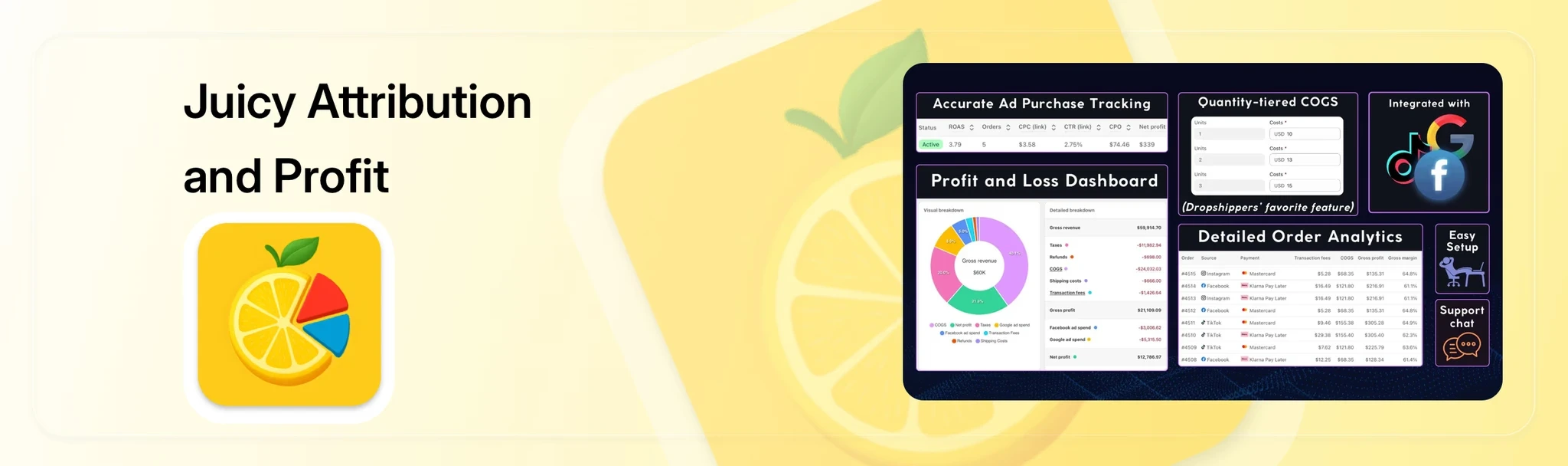
Juicy uses a Shopify theme pixel and URL parameters to connect each purchase to the right ad and campaign. It is built for merchants who want straightforward ad attribution with a profit layer on top, without a heavy setup.
Rating: 4.9 ⭐
Capabilities:
Ad-level and campaign-level attribution
Pixel and UTM-based tracking
Profit tracking with COGS, shipping, fees, and ad spend
Order margin visibility
Pricing: The plan starts at $29/month for stores with 500 orders/month
Breakthrough: A simple, affordable option for smaller Shopify stores that still want profit visibility.
Bottleneck: Accurate attribution depends on clean URL parameter setup, so messy UTMs will cost you accuracy.
4. Polar Analytics
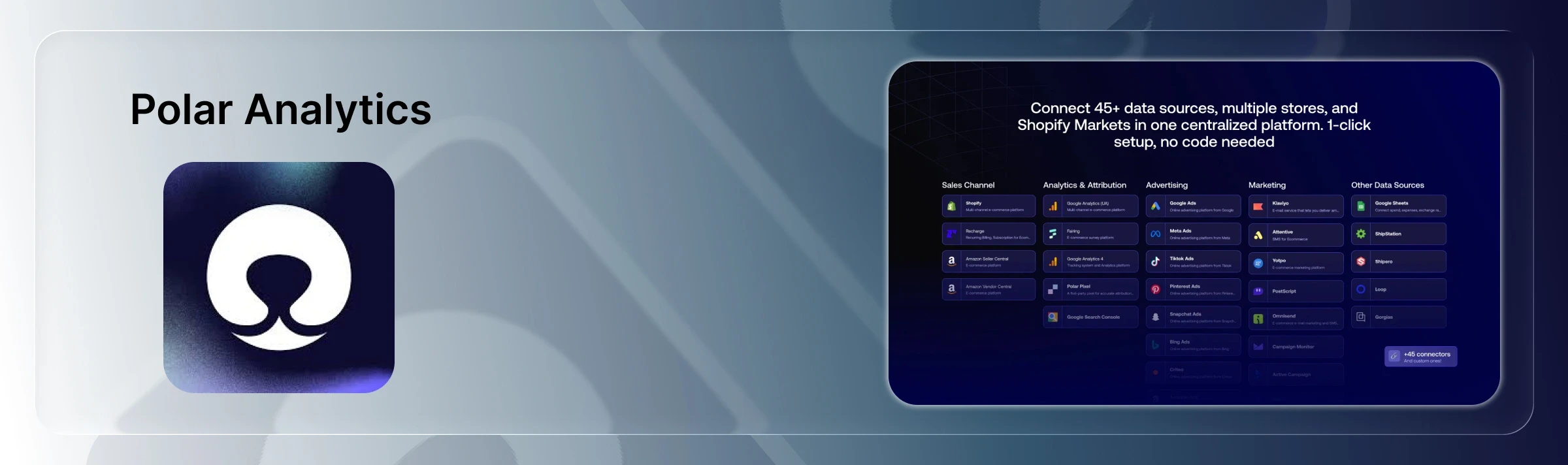
Polar connects attribution to a broader analytics layer. It helps larger brands analyze customer journeys, marketing touchpoints, margin, LTV, retention, and overall business performance from one place, which is more than most stores need.
Rating: 4.8 ⭐
Capabilities:
First-party, pixel-based attribution
Multi-touch attribution models
Cross-store journey tracking
Attribution connected to margin, LTV, P&L, and retention
Pricing: Starts from $750/month, custom GMV-based pricing.
Breakthrough: Strong for enterprise brands that need attribution and business intelligence together.
Bottleneck: The price and depth can be more than a smaller Shopify store will use.
5. TrueROAS
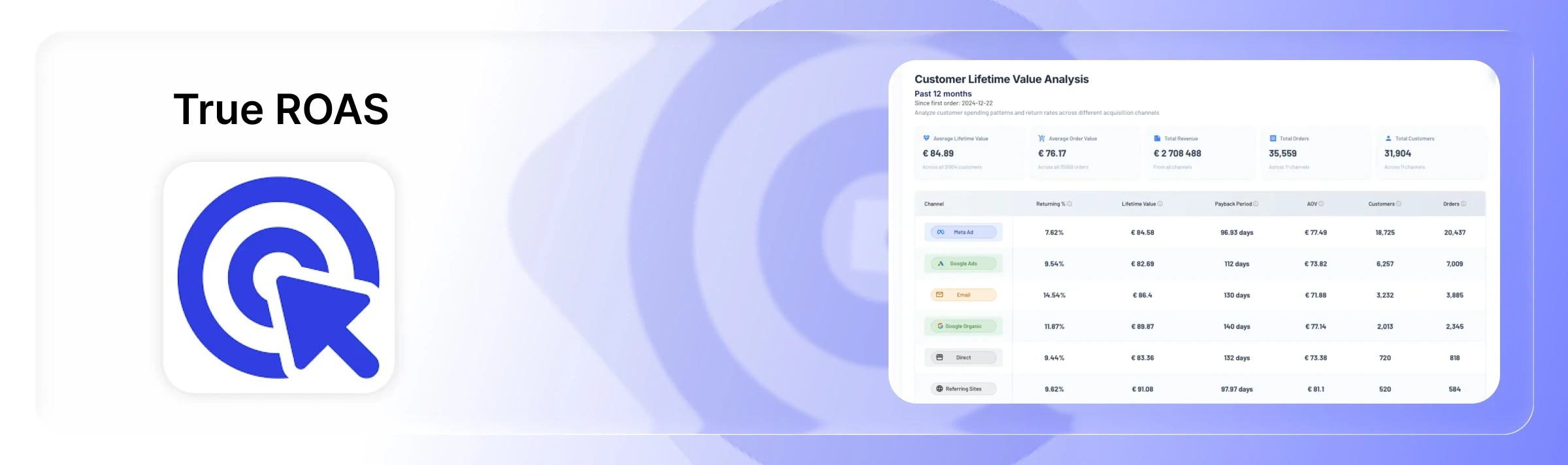
TrueROAS helps Shopify brands track which ads, campaigns, and creatives influence orders across Meta, Google, TikTok, and other channels. It blends tracking, post-purchase surveys, and AI-based modeling to show both direct and assisted conversions.
Rating: 4.8 ⭐
Capabilities:
Ad attribution across Meta, Google, TikTok, and more
Customer journey tracking for each order
Assisted conversion and creative performance analysis
Tracking, surveys, and AI-based modeling (MMM)
Pricing: Around $116/month for stores near $50K monthly revenue, scaling up to $500/month on the Unlimited plan.
Breakthrough: A strong option for brands focused mainly on ad attribution and ROAS clarity.
Bottleneck: It performs best once tracking, surveys, and ad account connections are all set up correctly.
6. Triple Whale
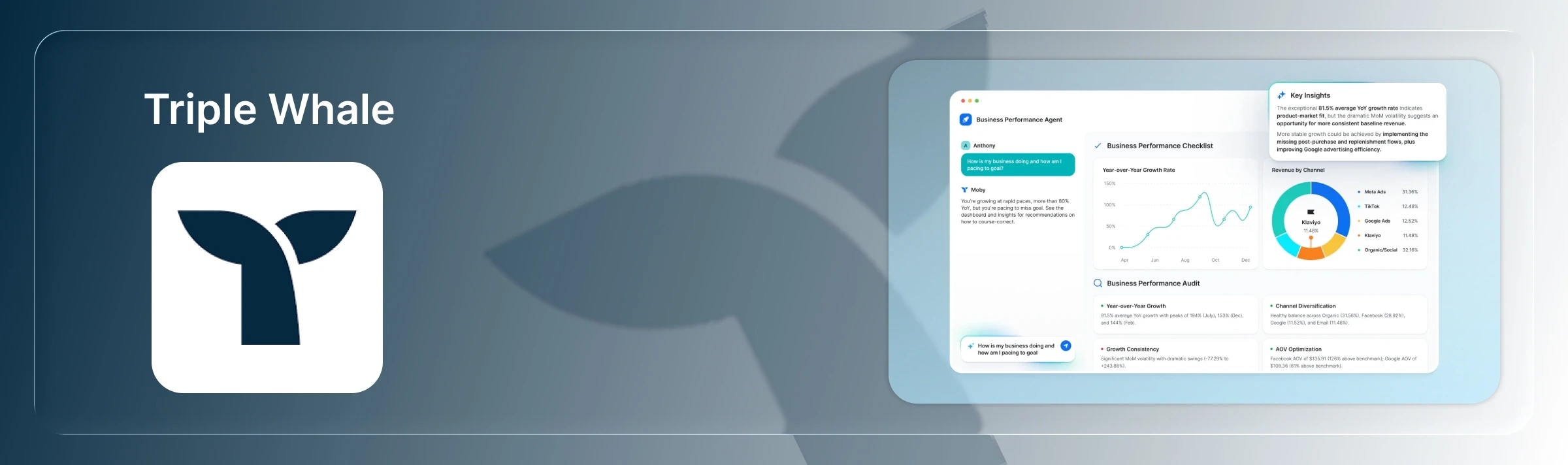
Triple Whale pairs its pixel with multi-touch models to show how channels and touchpoints contribute before a purchase. It is built for DTC brands that want attribution, dashboards, creative insights, and ecommerce analytics in one platform.
Rating: 4.2 ⭐
Capabilities:
Multi-touch attribution
Triple Pixel tracking
First-click, last-click, and linear attribution views
Post-purchase survey support
Pricing: From $299/month. Final pricing varies by GMV and package, across Foundation, Automate, and Enterprise tiers.
Breakthrough: Well suited to larger DTC teams with multiple paid channels. Its creative reporting is among the stronger options on this list.
Bottleneck: It can feel complex and expensive for smaller merchants.
7. ThoughtMetric
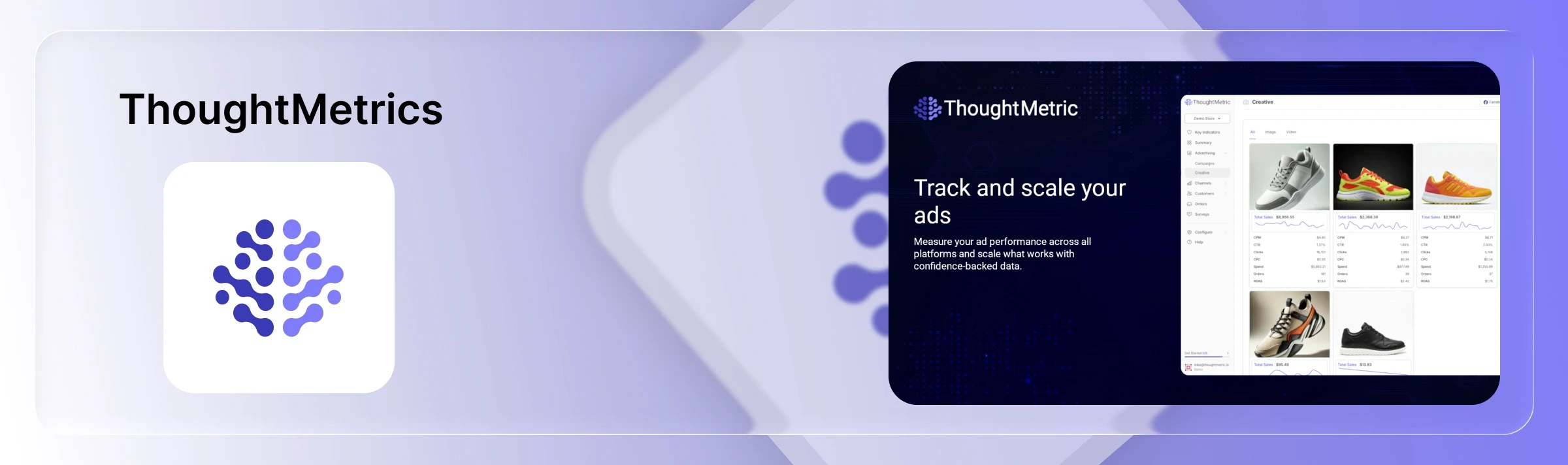
ThoughtMetric tracks how customers interact with marketing touchpoints before they buy. It lets merchants compare attribution across paid ads, organic, email, influencers, affiliates, and other channels in one view.
Rating: 4.2 ⭐
Capabilities:
Multi-touch attribution models
Server-side tracking
Configurable attribution lookback window
Campaign and creative performance reporting
Pricing: Starts at $99/month for up to 50k pageviews.
Breakthrough: A solid pick for brands that want a dedicated marketing attribution tool with several attribution views.
Bottleneck: It leans toward marketing attribution rather than full profit or margin-based decision making.
Which Shopify attribution tool should you pick?
The best Shopify attribution tool is the one that helps you make a better growth decision, not the one with the most charts. TrueROAS, ThoughtMetric, and Juicy work well for ad tracking. Polar and Triple Whale suit larger teams that need broad analytics. TrueProfit fits merchants who live inside profit reporting.
For most Shopify merchants, attribution is far more useful once it connects to profit. That is where Bloom fits: it lets you compare six attribution models, follow the customer journey, and tie campaigns back to contribution margin, break-even ROAS, costs, refunds, shipping, and ad spend, at a price built for growing stores rather than enterprise budgets. If you want attribution and profit analytics in one affordable view, it is a practical place to start.
Frequently Asked Questions
What is the Difference between first click, last click, and last non-direct attribution?
First click gives all credit to the touchpoint that introduced the customer. Last click gives all credit to the final touchpoint before purchase. Last non-direct click ignores direct visits and credits the last marketing touch before the sale, which helps when buyers return to your site directly to check out.
What is a Shopify attribution window?
An attribution window is the time frame a tool looks back over to assign credit for a sale. Common windows range from 1 day to 90 days. A short window suits impulse purchases, while a longer window fits considered buys where customers research over weeks before ordering.
Which attribution tool is best for a small Shopify store?
For most small Shopify stores, Bloom is the clearest answer. It gives you profit visibility alongside attribution in one place, so you are not stitching together a separate analytics tool and an ad attribution tool just to understand which channels are actually making you money. The setup is straightforward, which matters when you do not have a developer or a dedicated ops person to configure it.
Do I still need UTM parameters if I use an attribution tool?
It depends on the tool. UTM-based tools like Juicy rely on clean URL tags to attribute correctly. Pixel and server-side tools reduce that dependence but still benefit from consistent UTMs. Either way, a consistent tagging system improves data quality across every platform you run.
If you want attribution and real profit in the same view, Bloom is free to try on Shopify, and the consultation call is also free if you would rather have someone walk through your store's numbers with you first.
Know Your Real Profit And
The Ads That Actually Sell.
No need to spend. Just try it on your store.