The Marketer's Guide to TikTok Attribution
Learn how TikTok attribution works: how credit is assigned, the three interaction types, window settings, Analytics tools, and fixes for common blind spots

Figuring out which ads are working is how every marketer decides where the next dollar should go. On TikTok, that's harder than it sounds, because the path from ad to sale is rarely a straight line. Attribution is what makes it possible: it quietly drives almost every decision you make about your TikTok ad spend, because it's how you identify which ad interaction genuinely influenced a sale and deserves the credit for it.
And that credit comes down to three factors: where the conversion happens, how the customer interacted with your ad, and whether they converted within the given window.
This article breaks down how TikTok attribution works, from its attribution methods to the interaction types and windows you can set. We'll also get into TikTok Attribution Analytics, its limitations, and the best practices that help improve accuracy.
How TikTok Assigns Credit to a Conversion
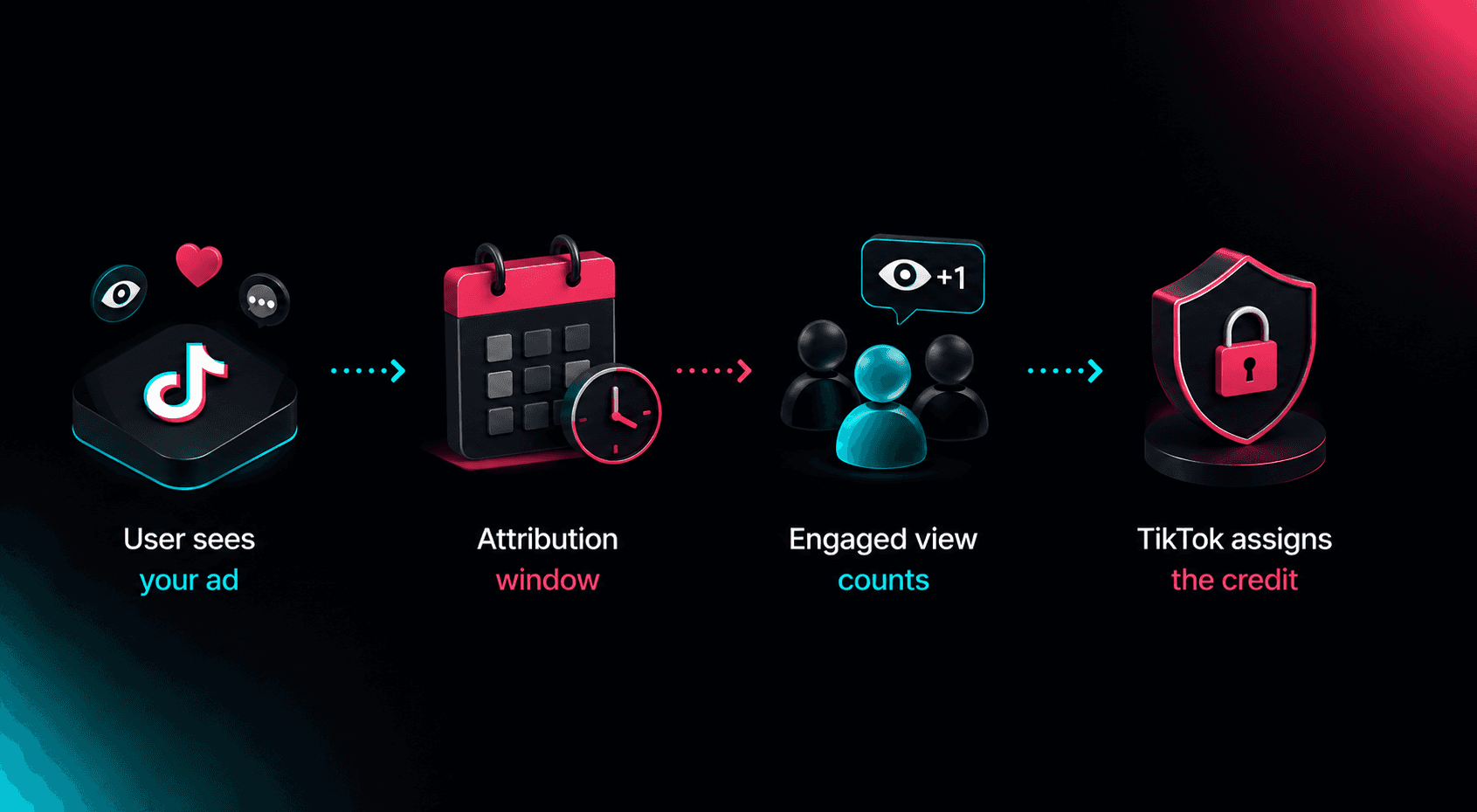
Whenever a customer makes a purchase after interacting with a TikTok ad, the measurement system looks back over their recent activity to work out which interaction should get the credit.
Say someone clicks an ad on Monday, scrolls past another on Wednesday without clicking, then buys on Friday. Which interaction earns the credit?
TikTok settles it with a clear priority: a click always beats a view. A click means the person deliberately chose to tap your ad, while a view just means it crossed their screen, so the click is the stronger signal. Recency only comes into play as a tiebreaker between two interactions of the same kind.
That's why the Monday click wins here, not the Wednesday view. You might expect the more recent interaction to take it, but because a click outranks a view outright, timing never even gets a say.
Why TikTok Attribution Differs From Other Platforms
TikTok almost always claims more conversions than the rest of your platforms combined, and it really comes down to one thing: TikTok counts views, GA4 counts clicks.
Think about how people actually use the app. They open it to scroll, not to shop, so your ad just plants a seed. Someone watches it, moves on, and does nothing. Then a few days later they search your brand or buy somewhere else entirely.
GA4 sees only that last click and quietly hands the sale to search or direct. TikTok, on the other hand, looks back and credits its own ad for the view that kicked the whole thing off, even though the person never clicked. Multiply that by the billion-plus people scrolling past ads every day, and it's easy to see why TikTok's numbers end up looking so much bigger than everyone else's.
Attribution Methods in TikTok
TikTok keeps track of your conversions in three different ways, and which one it uses just depends on where the sale actually happens.
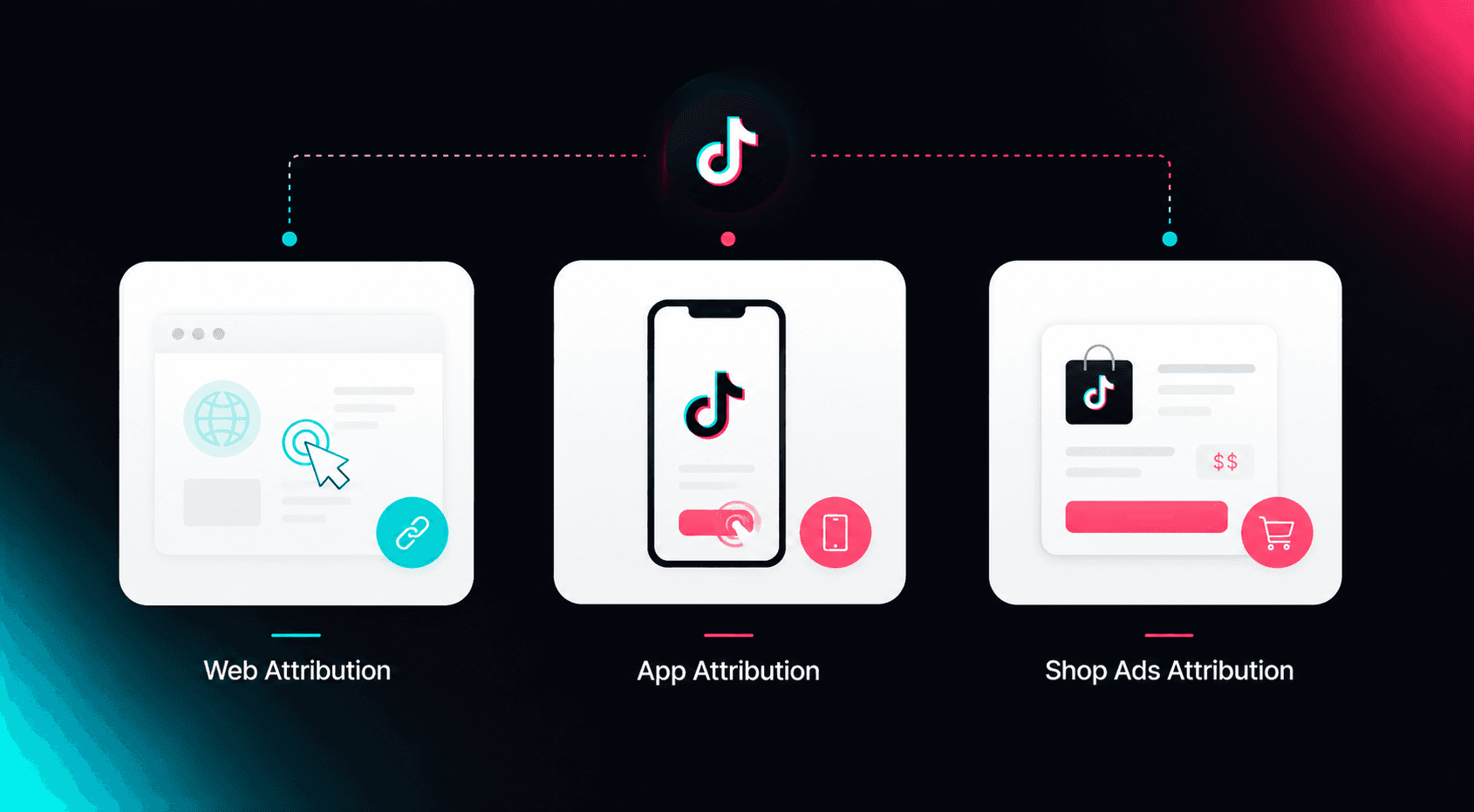
Web Attribution
Web attribution comes into play when the interactions happen on a website. It works by adding a small code snippet called the Pixel, which quietly tracks what visitors do and ties those actions back to the ad. The catch is that the Pixel runs in the browser, so ad blockers and iPhone privacy settings can block it without you noticing. Hence TikTok suggests turning on the Events API, which reports the same sales straight from your server, out of reach of those blocks.
App Attribution
Anything that happens inside a mobile app falls here, like someone downloading it, signing up, or buying something in the app. The website Pixel can't see any of that, so TikTok brings in a helper called a Mobile Measurement Partner. It keeps track of what people do inside your app and reports back to TikTok, so your campaigns still get credit for the installs and actions they drive.
Shop Ads Attribution
Sales inside TikTok Shop are the simplest case. Someone sees your ad, taps through, and checks out without ever leaving the app. Since nobody heads off to another website, there's no trail to lose, which makes this the cleanest setup of the three. One thing to keep in mind: credit goes to your Shop, not the exact product. So if someone clicks an ad for one item but buys something else from your Shop, that sale still counts toward the ad.
Attribution Types and Windows
To decide whether your ad earns a sale, TikTok looks at two things: how the user interacted with your ad, and whether it landed inside the attribution window. Those interactions come in three types, each with its own window settings.
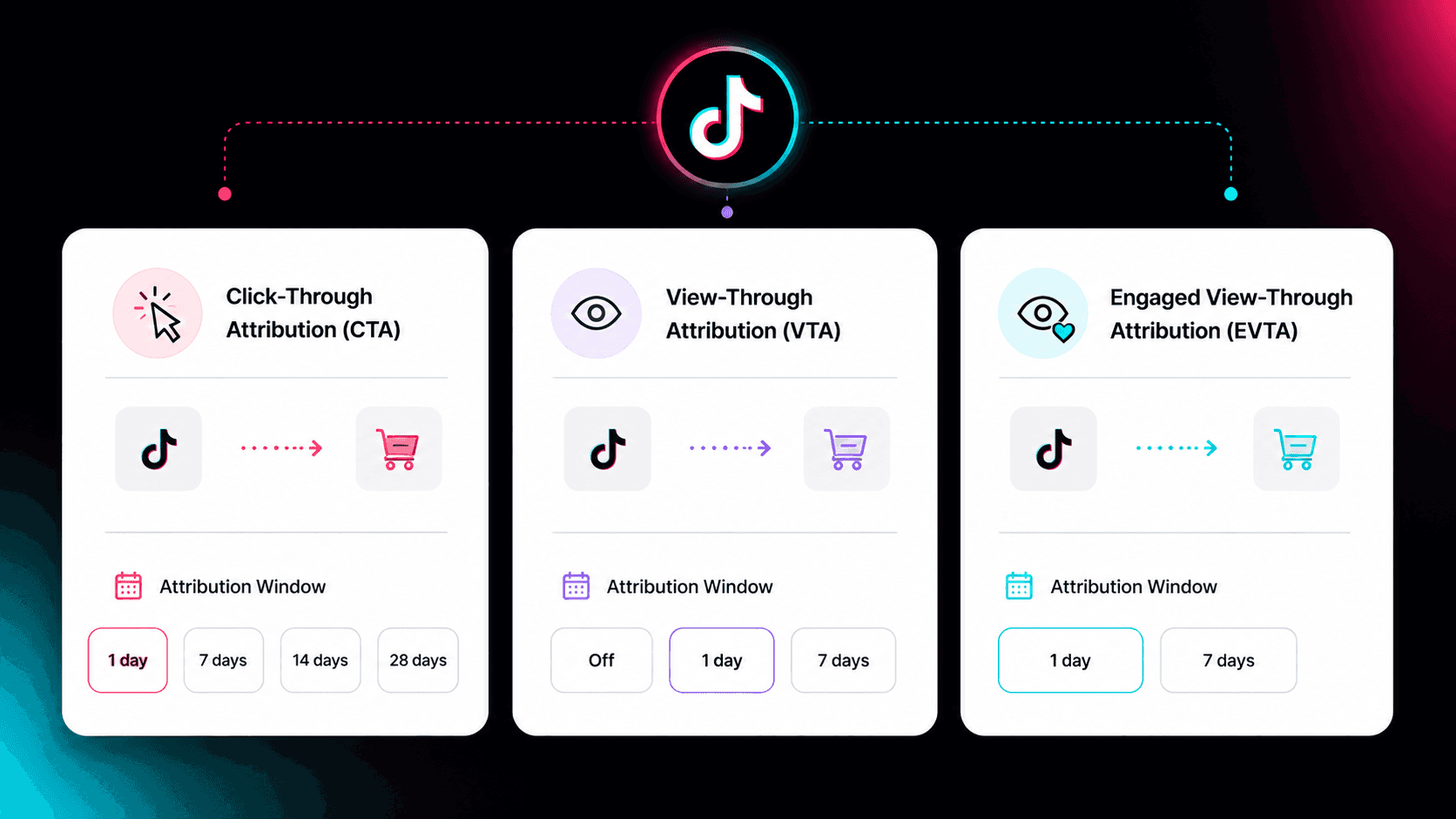
Click-Through Attribution (CTA)
When someone taps your ad and then buys or completes your tracked action, TikTok counts it as a click-through conversion. That makes it the strongest signal around. It takes real intent to click, not chance, and with such a straight line from click to sale, TikTok puts clicks ahead of views when deciding credit.
For click-through attribution, you can set the window to 1, 7, 14, or 28 days.
View-Through Attribution (VTA)
Here the person never clicks. They see your ad, scroll past, and later come back to buy on their own. TikTok still treats that view as the spark that planted the idea, so it gives the ad credit for the sale. Just keep in mind that a view is a softer signal than a click, so watch it rather than trust it outright.
For view-through attribution, you can set the window to Off, 1, or 7 days.
Engaged View-Through Attribution (EVTA)
TikTok reads a watch of 6 seconds or more as real interest, even without a click. If someone watches that long and later converts, it's logged as an engaged view-through conversion. It's useful because it separates people who actually paid attention from those who just scrolled by.
For engaged view-through attribution, you can set the window to 1 or 7 days.
Note: TikTok's standard default across most event types (web conversions, app installs, and in-app actions) is 7-day click and 1-day view.
TikTok Attribution Analytics
TikTok's Attribution Portfolio, a measurement suite launched in May 2026, brings together four Ads Manager tools aimed at the conversions last-click reporting misses.
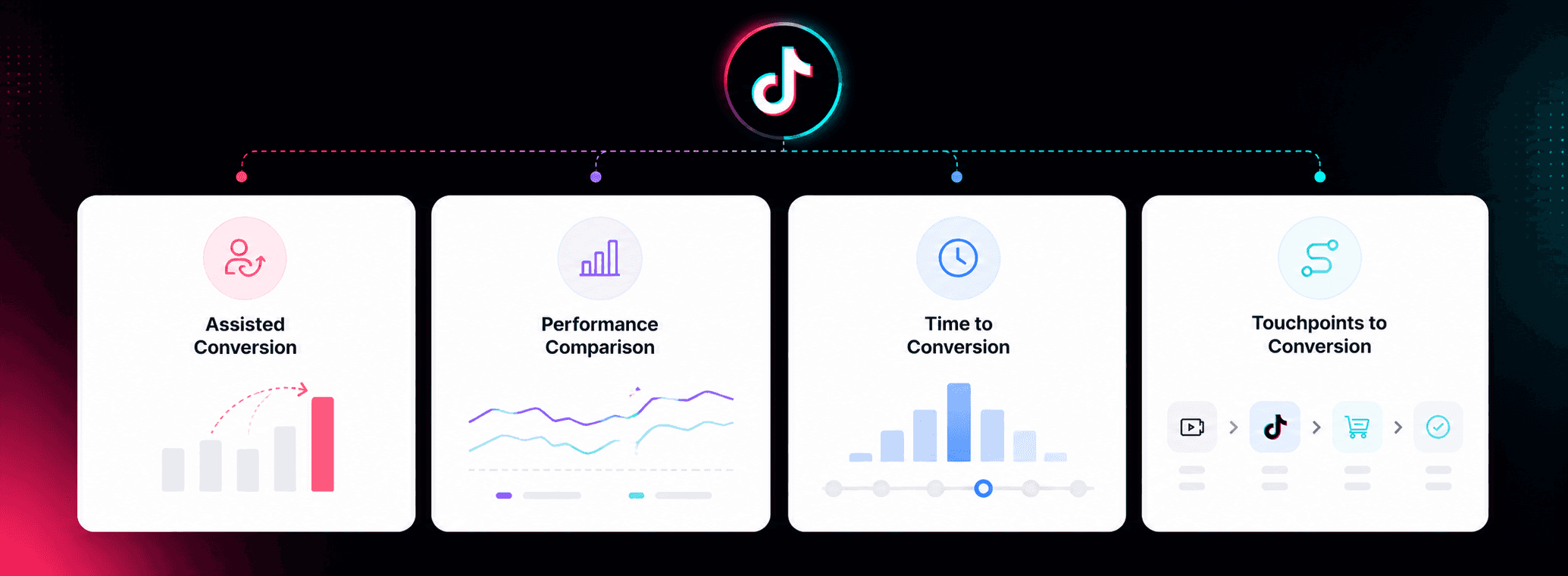
Assisted Conversion: It surfaces conversions where TikTok helped along the way but wasn't the final click. Someone sees your ad, skips the click, then buys through Google Search a week later. That sale lands in Assisted Conversion, which makes it the clearest window into what TikTok actually adds to your revenue.
Performance Comparison: It lets you compare attribution windows side by side. Put your current 7-day click setup next to a 28-day one to see how many extra conversions a longer lookback picks up, and close the gap between what TikTok reports and what your last-click tools show. The lookback now reaches back 90 days.
Time to Conversion: It reveals the real gap between the first ad interaction and the purchase, which makes it your best guide for setting a click window. If 60% of conversions land within 48 hours, a 7-day click will work. If they stretch across three weeks, go with 28 days.
Touchpoints to Conversion: It maps the full journey by showing how many times a customer interacted with your ads before buying, which combinations lift results, and how many touches it usually takes to close a sale.
TikTok Attribution Pitfalls and Their Fixes
It's good to know how TikTok attributes, but a few blind spots still catch people out, so get familiar with them before you trust what your numbers are telling you.
View-Through Overclaiming
Because TikTok gives credit to ads that were only seen, its numbers can pile up with conversions it didn't really drive. If you have a large base of past customers who are active on TikTok, they'll make organic repeat purchases that TikTok claims as its own, simply because they saw an ad in the prior 24 hours.
Fix: Set your window to 7-day click, 0-day view. Your reported ROAS will drop, sometimes sharply, but what's left is closer to the truth.
iOS Signal Loss
iOS conversions are often harder to track, since many users limit app tracking. As a result, pixel-based setups can miss part of the purchase journey, so TikTok uses modeled conversions to fill in what it can't directly see.
Fix: For campaigns with a large iOS audience, running the Events API alongside the pixel helps recover more conversion data through server-side tracking.
Data Processing Delay
TikTok's data takes 24 to 48 hours to stabilize, and attribution windows keep counting sales for days after the original interaction. So a campaign that looks flat this morning may fill in over the next two days. Judging performance too early, especially within the first day, is one of the most common mistakes, and it leads people to cut campaigns that were actually working.
Fix: Give every campaign 48 to 72 hours to settle before you judge it, and never cut or scale based on day-one numbers.
Each Platform Sees Only Its Own Touchpoints
The conversions you see in TikTok are always partly estimated, and when you open GA4 and Meta, you'll find them claiming the same sales too. Each platform only sees the slice of the journey it took part in, and fills the rest with its own best guess. So no single dashboard is ever the full story, and the numbers you're comparing across platforms are partly each one's estimate of what it couldn't see.
Fix: You only get the full picture when every touchpoint, from TikTok to Google to Meta, is gathered in one place under a single, consistent measure.
Conclusion
TikTok is genuinely one of the best discovery engines in advertising, brilliant at putting your brand in front of people who go on to buy. But it only ever sees its own part of the journey. It knows the click or view that happened on its platform, not the Google search that followed or the email that closed the sale, so it fills the gaps with modeled estimates.
That's the gap Bloom closes. Its first-party pixel reconstructs the full cross-device journey, ties every conversion to a verified Shopify order, and runs it through six attribution models, so credit is tied to real orders, not each platform's best guess.

Frequently Asked Questions
Why does TikTok show more conversions than Google Analytics?
Because the two platforms count different things. TikTok credits sales to ads people only viewed, even without a click, while GA4 only counts sessions that arrive through a click. On top of that, TikTok matches users across devices where GA4 usually cannot, so TikTok's totals almost always run higher.
How does TikTok decide which ad gets credit for a sale?
TikTok follows a clear priority: a click always beats a view, because a click shows the person deliberately chose to tap your ad. Recency only acts as a tiebreaker between two interactions of the same kind. So a Monday click will outrank a Wednesday view even though the view came later.
What is engaged view-through attribution (EVTA)?
EVTA credits a conversion when someone watches your ad for 6 seconds or more and later converts, even without a click. TikTok treats that 6-second watch as a sign of real interest. It is useful because it separates people who genuinely paid attention from those who just scrolled by.
Why is TikTok inflating my ROAS?
The usual cause is view-through overclaiming. TikTok credits sales to ads that were only seen, so repeat buyers who happened to see an ad in the prior 24 hours get counted as conversions the ad did not really drive. Setting your window to 7-day click and 0-day view removes view-through credit and gives you a truer picture.
Know Your Real Profit And
The Ads That Actually Sell.
No need to spend. Just try it on your store.