

eCommerce has changed dramatically over the last few years, and dropshipping has changed with it. Rising advertising costs, faster shipping expectations, increased competition, and smarter consumers have made it much harder to build profitable stores using the same tactics that worked in 2019 or 2020.
That shift is why so many people are asking the same question: is Shopify dropshipping still profitable in 2026, or has the market become too saturated to succeed?
The answer is more nuanced than the "dropshipping is dead" headlines you see online. While easy wins have become rarer, profitable stores still exist, but the business model now rewards sellers who understand marketing, positioning, and profitability instead of just trend-hopping.
Let’s understand what has changed in modern eCommerce, what actually determines dropshipping profitability today, why most stores fail, and how to build a Shopify dropshipping business that can still generate sustainable profit in 2026.
Key Takeaways
Shopify dropshipping is still profitable in 2026, but average net margins have compressed to 10–20% for well-run stores, down from 20–30% in the model's early years.
Most dropshipping stores fail because of poor product selection, high customer acquisition costs, weak supplier management, and no visibility into true profit.
Profitable stores in 2026 are built on contribution margin tracking, branded positioning, retention marketing, and supplier quality; not viral product chasing.
The difference between a store generating revenue and one generating profit comes down to whether the founder tracks what they actually keep after every cost.
What Is Shopify Dropshipping?
Shopify dropshipping is a retail fulfillment model where a store sells products it does not physically stock, with orders fulfilled directly by a third-party supplier or manufacturer. The merchant earns the difference between the selling price and the costs associated with sourcing, fulfilling, and acquiring the customer.
Unlike traditional eCommerce, dropshippers do not need to purchase inventory upfront or manage warehousing. This lowers the capital required to start and allows merchants to test products with less financial risk.
However, this convenience comes with trade-offs. Product costs are often higher than bulk wholesale pricing, which compresses margins. Sellers depend heavily on suppliers for inventory availability and fulfillment quality, and differentiation is challenging when multiple stores source identical products from the same supplier networks.
Is Shopify Dropshipping Still Profitable In 2026?
Shopify dropshipping is still profitable in 2026, but the stores generating consistent profit look fundamentally different from those that succeeded in 2019. Three shifts define the current landscape.
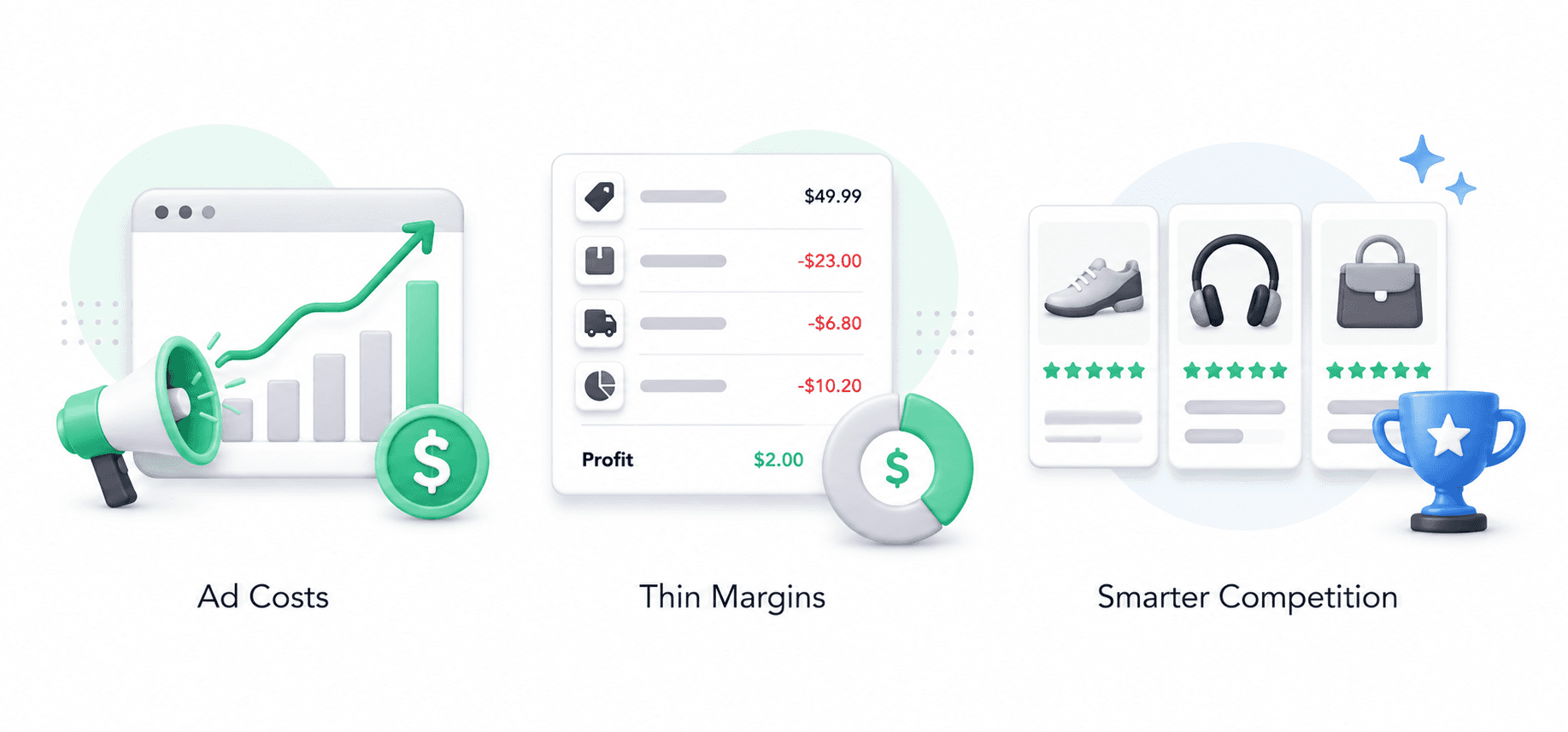
Ad costs have risen significantly.
Advertising costs on platforms like Meta and Google have increased significantly over recent years, especially in competitive ecommerce categories. For a store selling a $39 product with $18 in product and fulfillment costs, the margin available for customer acquisition is narrow. Efficient marketing and conversion optimization are no longer optional.
Margins are thinner than they look.
The average gross margin on a dropshipping product typically sits between 15% and 40% depending on niche and supplier. After subtracting ad spend, transaction fees, payment processing, refunds, and operating costs, real net margins for well-run stores typically land between 10% and 20%. Most founders don't know their real number. They subtract product cost from revenue and call it profit. That's gross margin before most of the costs that actually matter.
The competition has gotten better, not just bigger. Competitors entering the market in 2024 and 2025 are more skilled than those who entered in 2020. They create better short-form content, write stronger ad copy, build cleaner stores, and use data to make faster decisions.
At the same time, TikTok Shop has changed the landscape by giving suppliers and low-cost sellers direct access to buyers, compressing price expectations in categories that once had more margin headroom. Customer expectations have risen alongside competition, making fast shipping and a reliable post-purchase experience just as important as product selection and marketing.
Being early to a product is no longer enough. Better execution is the only sustainable edge. This does not mean every niche is saturated. Market conditions vary significantly across categories. Focused niches with strong purchase intent and a clear customer problem can still be profitable. The difference is that the bar for entry and execution is simply higher than it used to be.
Why Do Most Shopify Dropshipping Stores Fail?

Most Shopify dropshipping stores fail because they optimize for revenue instead of profit. They have no system for identifying which products, channels, and customers are actually making them money. Rising advertising costs, poor product selection, weak branding, and low conversion rates can quickly eliminate already thin margins.
Poor product selection and unit economics
A product going viral on TikTok is not the same as a product with strong unit economics. Trend-driven products often have short demand windows, intense price competition, and supplier costs that increase as demand rises. If the numbers do not work before scaling, they rarely improve at higher volumes.
High customer acquisition costs
A store spending $35 to acquire a customer on a $45 order is unlikely to be profitable. As ad costs rise, CAC can quickly exceed the profit generated from each order. Without a retention strategy, the business must continuously pay to acquire new customers.
No visibility into true profitability
Many founders see revenue growing and assume the business is healthy, without understanding how much is being spent on advertising, fulfillment, refunds, tariffs and fees. A store can generate thousands in revenue and still lose money if costs go unmonitored. Profitable stores track profitability at the product, order, and channel level.
Poor supplier management
Slow shipping, inconsistent product quality, and high refund rates do not show up in revenue reports. Instead, their impact surfaces later as chargebacks, negative reviews, and declining repeat customers. Tracking refunds and chargebacks by supplier, not just by product, is one of the most overlooked ways to protect profit in dropshipping.
Weak branding and low conversion rates
A store with no brand identity competes on price alone. Generic stores with supplier-copied descriptions and no clear customer promise convert poorly and build nothing that compounds. The competitors you are up against in 2026 have better content, cleaner stores, and stronger ad creative. Small improvements to product pages, photography, social proof, and checkout flow often generate more profit impact than equivalent increases in ad spend.
Ultimately, dropshipping is not passive income. While fulfillment can be automated, building a profitable store requires continuous product testing, marketing optimization, supplier management, and profitability tracking. The stores that succeed treat it like a real business, monitoring numbers daily and making decisions based on data rather than assumptions.
How To Make Shopify Dropshipping Actually Profitable In 2026
The stores that remain profitable in 2026 are not necessarily selling better products. They are making better decisions. That starts with knowing your real numbers at every level of the business.
Most merchants already have plenty of data. The problem is that it is scattered across Shopify, ad platforms, shipping providers, and retention tools. Without connecting those numbers, it is difficult to know which products, channels, and customers are actually generating profit. Profitable stores rely on a system that brings all of it into one view.
Track profit after every cost
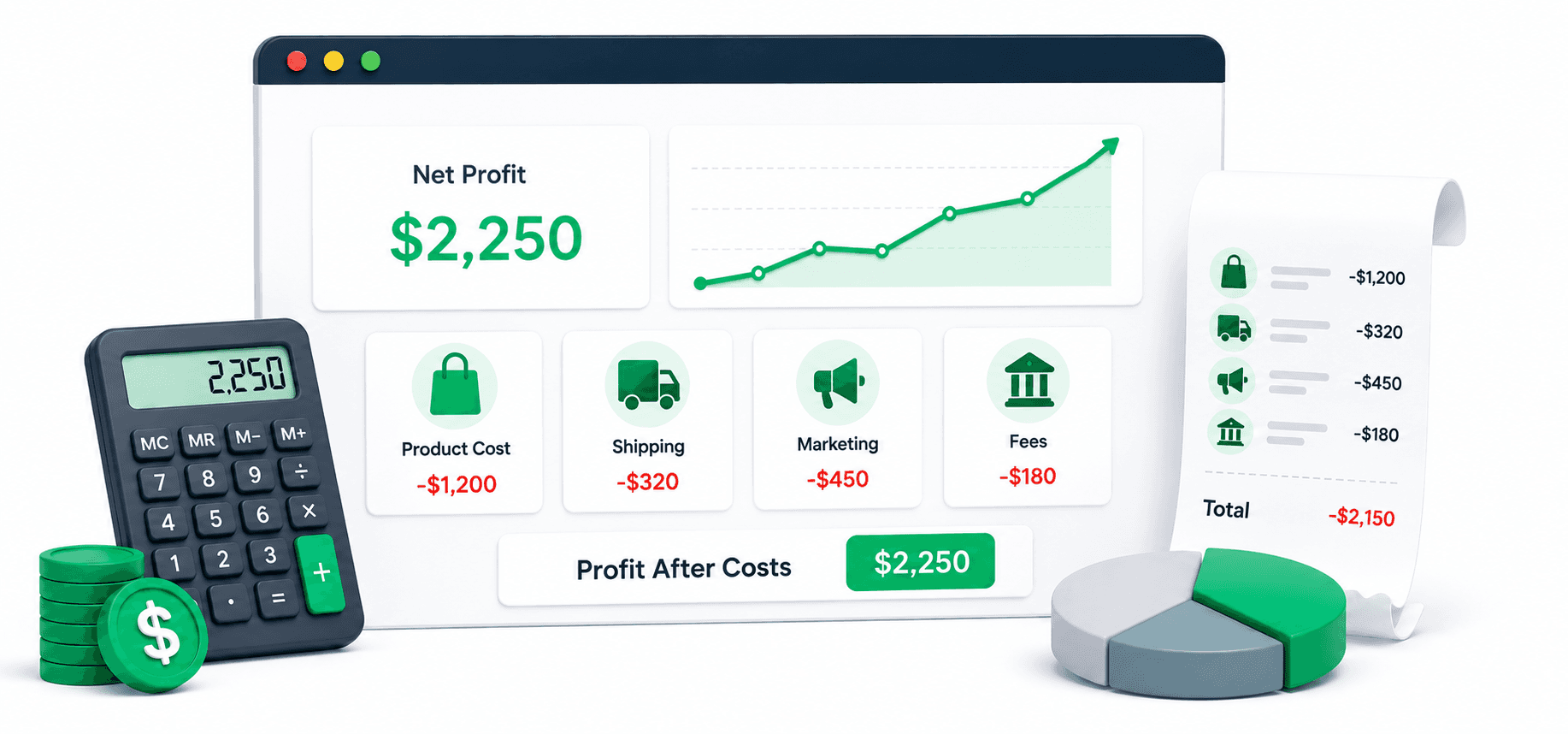
Contribution margin, what remains after product cost, fulfillment, and ad spend, is the only number that tells you whether a product or campaign is worth continuing. Connect your COGS to Shopify, integrate your ad platforms, and pull real shipping costs into a single profit view. Bloom does this automatically, combining order data with real costs across every channel and outputting a P&L from revenue down to true operating profit.
Track which products are actually making you money

Once profitability is tracked correctly, product-level performance becomes visible. With Bloom, you can see every SKU based on actual contribution margin identifying Star Performers worth scaling, flagging Margin Traps that look profitable on ROAS but aren't, and surfacing Money Pits losing money on every order. For a store testing multiple products simultaneously, this replaces guesswork with a clear picture of what deserves more investment and what needs to be cut.
Know your break-even acquisition cost
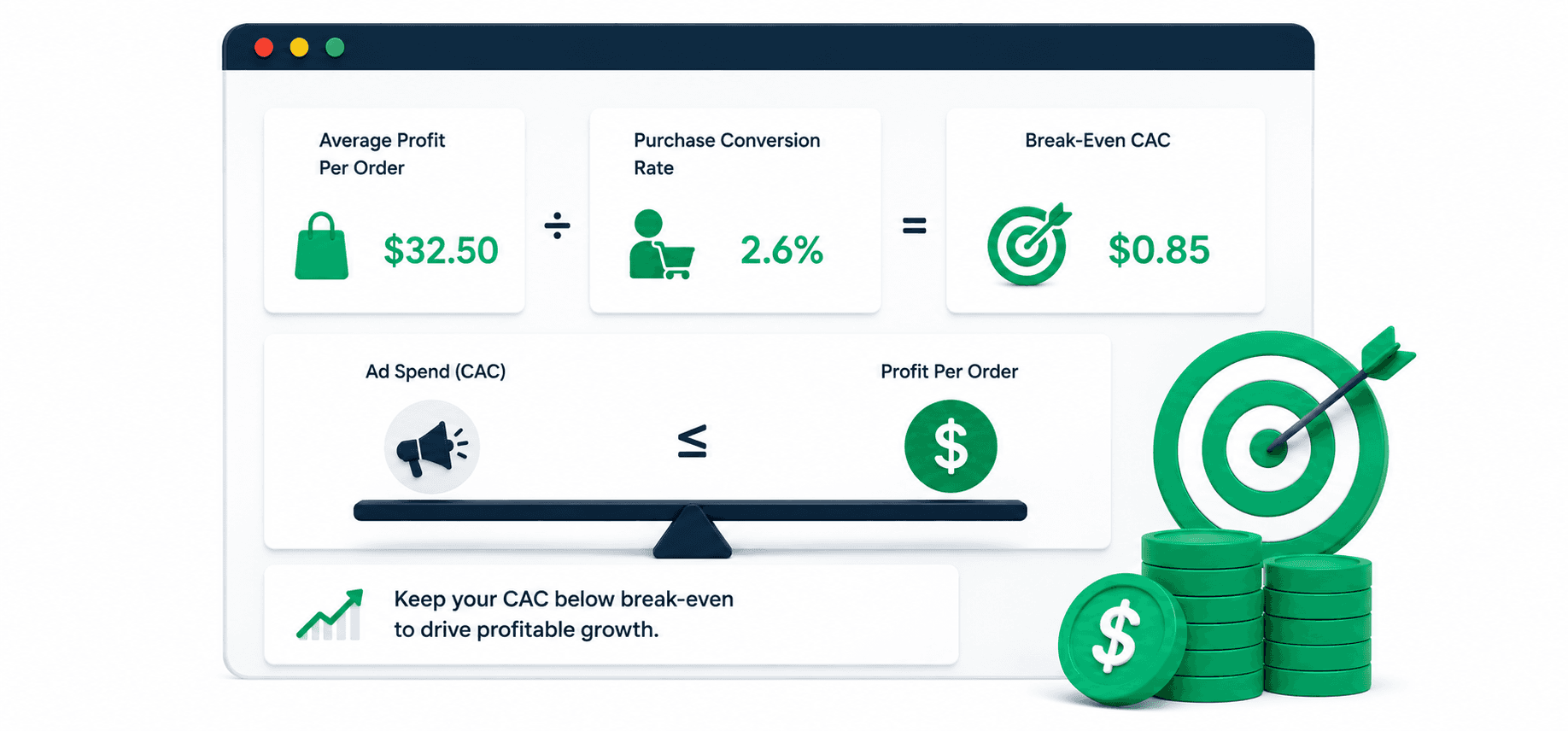
With product-level margins established, you can calculate exactly how much you can spend to acquire a customer and remain profitable. This is your Break-Even ROAS (BEROAS), the minimum return at which advertising stops losing money. It is product-specific because margins differ per SKU. Bloom calculates BEROAS per product automatically and applies a three-question framework before any scaling decision. The output is a clear Scale, Hold, or Cut verdict driven by margin data, not platform dashboards.
Build a retention engine
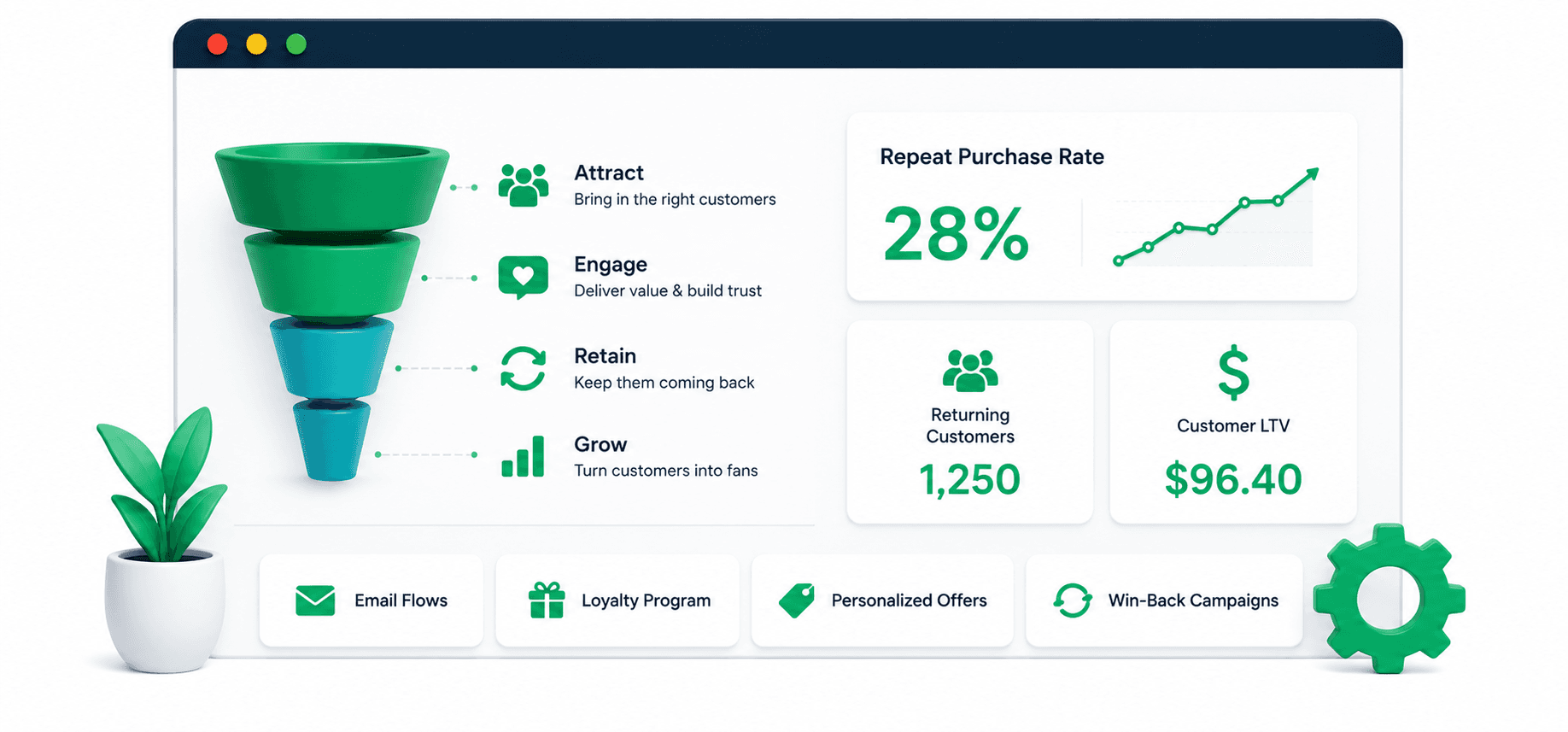
Lowering acquisition cost is only one part of the equation. The other is increasing what each customer contributes in profit over time. Email flows, SMS campaigns, post-purchase offers, and win-back sequences can increase repeat purchases without additional acquisition costs.
However, retention should be evaluated on profitability, not revenue alone. A campaign may generate strong sales while adding little value to the bottom line after discounts, product costs, and fulfillment expenses. Understanding which retention efforts drive sustainable customer value helps merchants increase lifetime value while protecting margins.
Use dropshipping as a launch model, not a permanent state
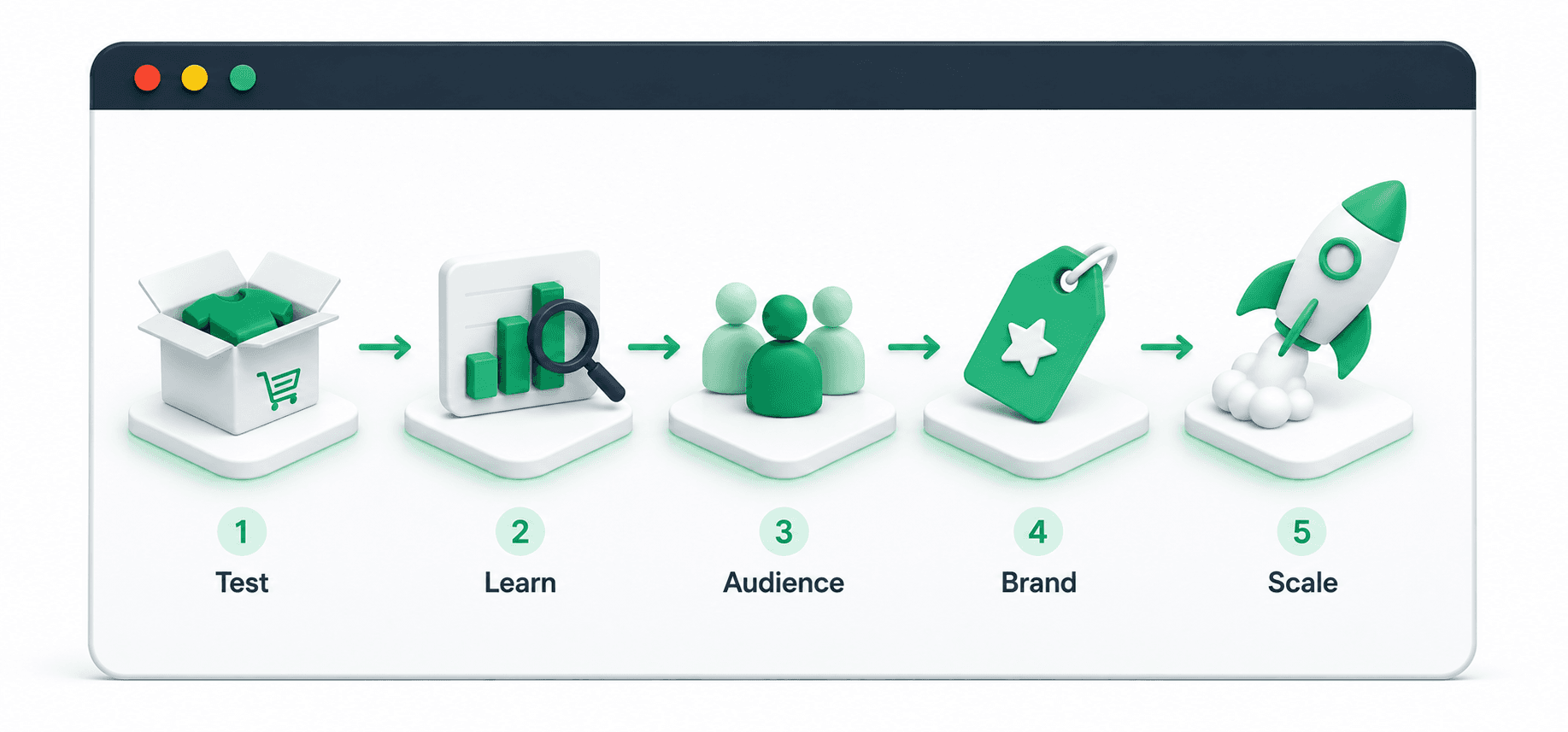
The most successful operators use dropshipping to validate demand before investing in inventory or manufacturing. Once demand is proven, many move toward private labeling or direct manufacturing, improving gross margins from roughly 20–35% to 45–60%. The goal is not just to find products that sell. It is to find products that can support a brand customers would choose over a generic alternative. Dropshipping validates the opportunity. Building a brand creates long-term value.
Conclusion
Dropshipping in 2026 is no longer defined by shortcuts or isolated “winning products,” but by the ability to operate like a real, structured business. The advantage has shifted toward merchants who combine strong branding, fast execution, and consistent experimentation with a clear understanding of their real unit economics including contribution margin per order, product, and true customer acquisition costs beyond platform ROAS.
While competition and costs have increased, so has the sophistication of tools and systems available to manage them. Modern stores increasingly rely on SaaS platforms, automation, and data unification to connect Shopify, ad channels, fulfillment, and retention data into one profitability view.
Ultimately, the businesses that win are those that treat dropshipping as a long term brand building model where decisions are driven by profit clarity, not revenue noise, and continuously optimize across products, channels, and customer cohorts rather than chasing isolated “winning products.
If you are scaling multiple products and campaigns but still don’t know what is actually profitable after ads, shipping, and costs, you can try Bloom on a free trial.
Frequently Asked Questions
What Profit Margin Should I Target For A Shopify Dropshipping Store?
A healthy net profit margin is 15–20% after product cost, fulfillment, ad spend, platform fees, and refunds. Gross margins of 30–40% can look strong but disappear quickly once the full cost stack is applied. Below 10% net, there is little room to absorb any rise in ad costs or supplier pricing.
How Much Does It Cost To Start A Shopify Dropshipping Store In 2026?
Realistically, $500 to $2,000 for the first 60 days. That covers Shopify Basic ($39/month), domain registration, a product research tool, and an initial ad testing budget ($600–1,200). Estimates below $200 almost never account for ad spend, which is the primary driver of whether a store survives.
What Is The Difference Between Gross Margin And Contribution Margin In Dropshipping?
Gross margin is revenue minus product cost. Contribution margin subtracts fulfillment and ad spend as well. Contribution margin is the more accurate profitability measure because it accounts for the three largest costs beyond the product itself. Most stores that look profitable on gross margin are unprofitable on contribution margin once those costs are included.
How Do I Know Which Of My Dropshipping Products Are Actually Profitable?
By tracking contribution margin per SKU, not revenue or platform ROAS. A product can show strong ROAS while losing money on every order if product cost, shipping, and return rate are high. Bloom automates this by pulling real COGS and ad attribution data into a single product-level profit view.
How Long Does It Take To Become Profitable With Shopify Dropshipping?
Most stores that reach profitability do so within 3 to 6 months, but the range varies significantly based on niche selection, ad budget, and how quickly the founder iterates on product testing. Stores that enter with a clear unit economics framework knowing COGS, target margins, and break-even acquisition cost before spending on ads tend to reach profitability faster than those who test products without a financial model.
Can You Still Start A Dropshipping Business With No Experience In 2026?
Yes. The technical barriers are low; a store can be live in a day. The harder skills are finding products with viable unit economics, running profitable ad campaigns, managing supplier relationships, and tracking real margins. Beginners who test with small budgets and track contribution margin from the start have a significantly higher success rate than those who chase trends and scale fast.
Discover More